
European digital sovereignty has become an urgent priority for governments and public-sector organisations. Choosing technology from a trusted European supplier is an important part of that, but genuine sovereignty goes further. It also depends on software provenance, licensing, open development, security architecture, open standards and access to people with the expertise to maintain the technology for the long term.
Collabora Productivity is a European company with offices in Cambridge and Hamburg, building and supporting an open-source office suite used by governments, educational institutions, enterprises and public-sector organisations in Europe, and around the world.
We distribute truly open-source software that can be inspected, audited, maintained and deployed wherever an organisation chooses. Behind that software is an experienced European company, a globally distributed engineering team and a large international open-source community. Together, they bring decades of office-suite development, document-format expertise and practical deployment experience.
That combination matters. A product’s name or stated country of origin can tell procurement teams only so much. More important questions include: Can we verify where the code came from? Is there an experienced team capable of maintaining it? Is it developed in the opene (rather than just “thrown over the wall”)? And will it genuinely leave the organisation in control?
Collabora Online provides strong answers to each of these questions. Here are 6 reasons European governments and organisations already use it as their sovereign office suite.
1. Open source with verifiable provenance
Publishing source code is not the same thing as developing software openly.
A genuinely open project should provide a clear record of how its code was created. Organisations should be able to see meaningful commit messages, public code review, licence statements, a documented contribution process and even identifiable individual contributors.
This creates a traceable software supply chain. It allows customers, partners and auditors to understand not only what the current code contains, but how it got there. This transparency is particularly important for a product as large and complex as an office suite. Public development makes it possible to see whether work is ongoing, which organisations and developers are contributing, how changes are reviewed and whether there is a healthy community beyond the company responsible for the product.
It also means Collabora Online is not developed privately and periodically “thrown over the wall” as a new source-code release. Customers, partners and independent contributors can participate in its development, discuss proposed changes and contribute improvements that benefit the wider ecosystem.
2. Pragmatic Copy-left Licensing
Our use of the Mozilla Public License 2.0 also offers an important practical advantage.
MPLv2 protects modifications to source files while allowing those files to be distributed under unhelpful restrictions. This matters when building integrations, branded products and mobile applications while keeping improvements to the covered code open.
By contrast, the distribution of GPL or AGPL applications through platforms such as Apple’s App Store, conflicts with the additional restrictions imposed by Apple’s distribution terms (more on this from the free software foundation here), putting anyone who relies on a mobile solution in an awkward situation. This could be addressed if the copyright holder grants a separate licence or App Store exception, but a downstream fork for example does not have the right to do that for code written by someone else.
Collabora Office for Mobile is already available through the Apple App Store, Google Play and F-Droid while its source code remains completely open-source. This is not a theoretical licensing distinction – it means we and our partners can deliver open-source mobile and white-labelled applications through the channels our users expect.
3. A European company with global engineering depth
Collabora Productivity is fundamentally a European company.
We have offices in Cambridge, UK, and Hamburg, Germany. Hamburg is particularly significant in the history of European office-suite engineering, and many members of the team have been working on this technology and its document formats for decades.
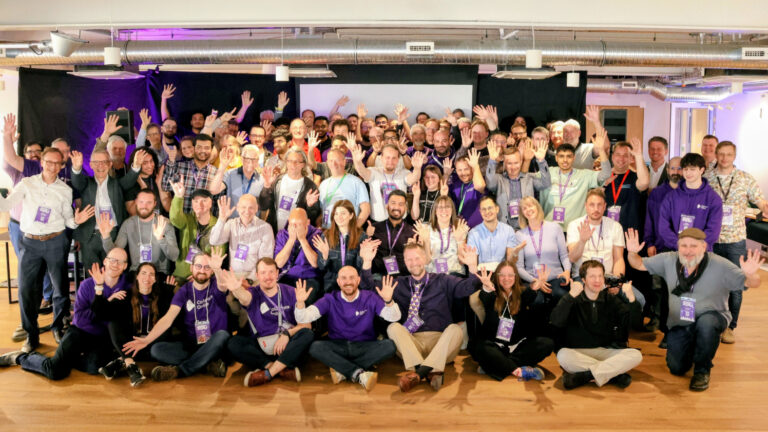
At the same time, we are not limited by national borders. We are a remote-first company with engineers across 27 countries, supported by an even larger international community of developers, translators, integrators, partners and users.
More than 500 individuals have contributed over the last decade, and the software has been translated into 92 languages. Development is discussed in open community calls every week, and participation is not restricted to Collabora employees.
Office suites are among the largest and most complicated desktop and browser-based applications ever built. They contain thousands of features and must interpret file formats created by many different products over several decades. They must handle everything from a two-paragraph letter to a million-row spreadsheet, a complex government report or a presentation assembled from years of inherited templates. Supporting such a system requires more than familiarity with its web interface.
Collabora Online’s team includes engineers with deep experience in document rendering, ODF and OOXML, spreadsheet calculation, floating tables, accessibility, internationalisation and interoperability. Multiple members of the team either participated in creating these document standards or currently sit on the committees responsible for developing them – the standards public authorities now depend upon.
This is expertise built over decades, not acquired by renaming a repository.
4. Security policy enforced on the server
Many online editors enforce restrictions inside the browser. A button may be hidden, printing may be removed from a menu or copying may be disabled in the user interface. But a browser is controlled by the user. Client-side restrictions can therefore be purely cosmetic unless the underlying server also refuses the prohibited operation.
Collabora Online takes a different architectural approach. The original document is processed and rendered on the server. The browser receives rendered document tiles and the information needed for interaction rather than taking responsibility for processing the complete office file itself.
That gives Collabora Online a much stronger enforcement boundary.
Restrictions on printing, downloading, exporting or copying can be applied by the server rather than merely hidden in the interface. Integrators can apply different controls for individual users and sessions, based on permissions supplied by the document platform.
Our security is not a skin over the editor. It is part of the architecture.
5. Open standards as the foundation
A sovereign office suite should not merely be open-source software. It should also allow organisations to store their institutional knowledge in open, vendor-independent formats.
Collabora Online treats Open Document Format as a first-class format.
It supports ODT for text documents, ODS for spreadsheets, ODP for presentations and ODG for drawings. We also support Microsoft’s current and legacy formats because organisations have enormous existing document estates that cannot simply be abandoned.
DOCX, XLSX and PPTX are important compatibility formats, in the same way that you need to be able to open older DOC, XLS and PPT files. A capable office suite must read, edit and write them well.
But compatibility with an inherited format is not the same as choosing that format as the foundation of a sovereign document strategy, which is why governments are increasingly shunning the Microsoft format.
This however creates a fundamental problem for any supposedly sovereign office suite built on Microsoft’s technology. A recent addition to the document-editing space, EuroOffice, is based on ONLYOFFICE, which roundtrips any ODF file to OOXML and back while editing which they acknowledge can lead to data loss. EuroOffice has already had full ODF support flagged by the wider community as a priority for a future release, and we are pleased to see the project leadership committing publicly to “fully support open standards such as ODF formats, and that this will be on top of the agenda for [their] next release.” That is welcome, but it also raises an obvious procurement question:
If open standards are essential to sovereignty, why begin with an editor whose native document model is based on Microsoft formats?
Import filters can be improved. Code can be borrowed from other projects where licences permit it. But an import filter does not change the editor’s underlying document model. If ODF is always converted into an OOXML-native representation before editing, it remains a translation target rather than the foundation.
Collabora Online starts from the opposite direction: open standards are native, while proprietary and legacy formats are supported through extensive interoperability engineering.
The difference becomes visible in practical features. Collabora Online offers native ODG support, a complete Draw application, hybrid PDFs that retain an editable ODF document, extensive PDF/A controls and rich PDF export options for archival, legal and public-sector workflows.
True document sovereignty requires control of both the application and the format.
6. A supportive and supportable platform
For integrators, we offer a meaningful relationship, not a black box.
Many Collabora Online integrations are initially developed by independent organisations solving their own requirements and then contributed back to the wider ecosystem. The Moodle integration as an example, began as work by a university department independently of us, which we now help to maintain.
Collabora Productivity also does not operate a competing commercial cloud-office service. Our interests are aligned with our partners, public authorities, sovereign-cloud providers and integrators deploying the software, not in moving customers into a Collabora-owned storage platform.
Most importantly, the support comes from people who work on the underlying office technology.
If an especially unusual spreadsheet fails to calculate, an imported document changes layout or a tender requires a new integration capability, the issue is not passed to a support organisation sitting layers above an inherited fork. It reaches engineers within minutes who understand and maintain the code itself.
A practical comparison for procurement teams
| What should be examined? | Collabora Online | What to scrutinise in alternatives |
|---|---|---|
| Code provenance | Public development history, code review, identifiable contributors | Can the supplier identify who wrote the code and establish the right/legality to distribute and use every component? |
| Open-ness | Established development processes, weekly community calls, an open annual conference, and a long-standing contributor base | Do we have access to the creators of the code? Is there a engaged community working on the project? |
| Licensing | MPLv2, with practical integration and App Store distribution options | Do licence terms conflict with additional App Store conditions, or white-labelling? |
| Native formats | ODF-native, with extensive OOXML and legacy-format interoperability | Are ODF files edited natively, or converted into OOXML and back? |
| Security boundary | Server-side rendering, permission enforcement and personalised watermarking | Are restrictions enforced by the server, or primarily hidden in browser code? |
| Engineering depth | Decades of document-format, layout, spreadsheet and standards expertise | Who will diagnose and fix difficult problems inside the inherited office engine? |
Choose technology, not a label
European digital sovereignty matters.
Public authorities should be able to run essential software on infrastructure they control, buy support from organisations they trust, inspect the technology they depend upon and avoid exposure to vendors or jurisdictions that create unacceptable risk.
But sovereignty is weakened when it is reduced to branding.
Collabora Online offers something more substantial: an already established European company, with a track record providing for the European public and private sectors, a global open-source community, a traceable development history, open standards, mature applications and engineers who understand the code they support.
That is not Euro-washing. It is something more. We offer practical, auditable and supportable European digital sovereignty, built on mature, high-quality technology.
Try it out now!