

Michael Meeks
Let’s kick the developers out!
In the ongoing saga of The Document Foundation (TDF), their Membership Committee has decided to eject from membership all Collabora staff and partners. That includes over thirty people who have contributed faithfully to LibreOffice for many years. It is interesting to see a formal meritocracy eject so many, based on unproven legal concerns and guilt by association. This includes seven of the top ten core committers of all time (excluding release engineers) currently working for Collabora Productivity. The move is the culmination of TDF losing a large number of founders from membership over the last few years with: Thorsten Behrens, Jan ‘Kendy’ Holesovsky, Rene Engelhard, Caolan McNamara, Michael Meeks, Cor Nouws and Italo Vignoli no longer members. Of the remaining active founders, three of the last four are paid TDF staff (of whom none are programming on the core code).
Contriving a mess
In recent times TDF’s strategy has included: stacking the TDF board with non-technical, affiliated staff, and at the same time accusing others of historic conflicts of interest; overriding past board and engineering steering committee decisions and violating their own processes to drag code out of the attic to enable competing with their largest single contributor. This last apparently with no clear technical plan beyond “to start a discussion”. Other schemes worth discouraging have been spending donors’ money to take legal action against blameless, volunteer, ex-board members (for seemingly contrived reasons), and threatening those that contribute to the project for using the normally free to use LibreOffice trademark under license, while ignoring the widespread misuse of the mark by unlicensed non-contributors.
Another innovation has been a new tendering policy: voted through full of regression bugs and FIXMEs, or perhaps TDF incredibly not paying for tendered code under contracts that had been delivered (and meanwhile selling that code itself in app-stores). Then we have delaying and overturning elections after they are run, or dramatic changes to TDF’s bylaws by a rump-board. Another highlight has been ejecting conference organizers Gabriel Massei and Gabor Kelemen, the latter in mid-organization of the annual conference (who nobly continued to deliver that). We could spend a week enumerating the contributions of those unfairly removed, how about Andras Timar who was responsible for creating our translation infrastructure, but let’s not get too deeply into this deep well of tangled incoherence; so where is the good news
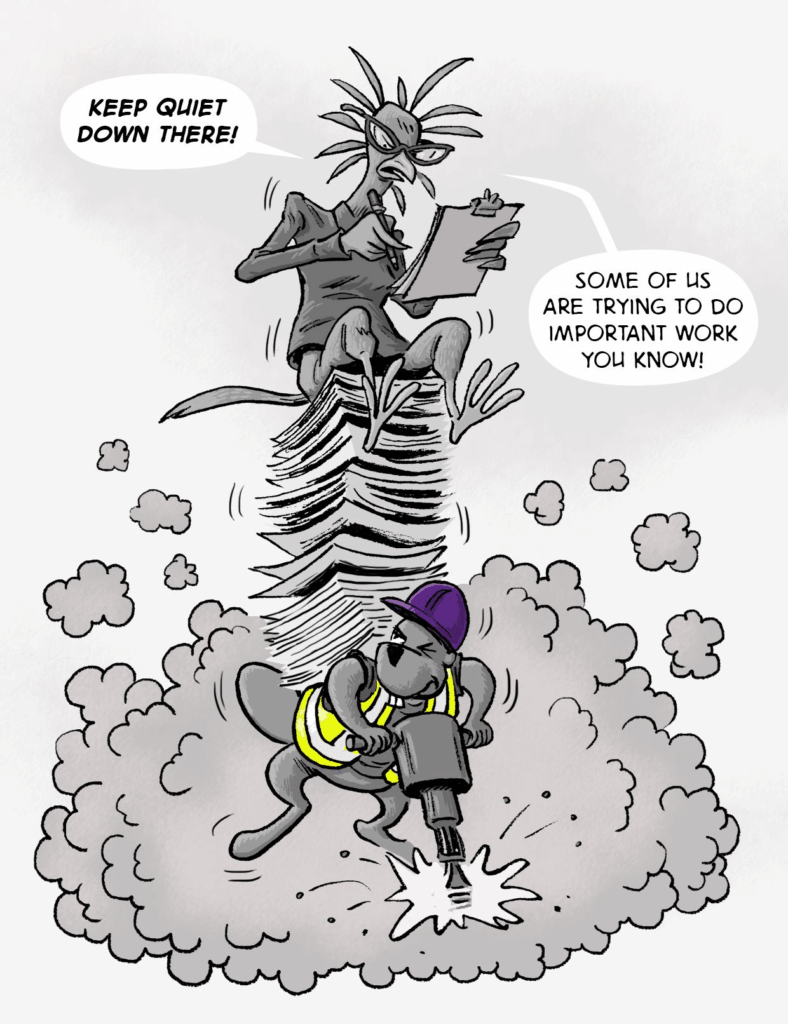
April Fool !?
If you got here, and thought “this is the most outrageously implausible set of circumstances, it can’t be true” – well done, this is indeed April the 1st … but sadly this is really is a summary of where we are now at; a double april fool as it were.
Sense & sensibility
Our team at Collabora is dedicated to making Open Source Rock: restoring Digital Sovereignty to our users. Many of us helped to create LibreOffice before TDF even existed, and we plan to continue our mission. If for now we can climb out of this pit of directionless political grievance – that is a relief, and we have a clear plan. If, like us, you too love to work on making great Free / Libre / Open Source Software (FLOSS), and like a sensible place to do it please do come work with us on what is still by far the best FLOSS Office code-base in the world – with a bright future ahead of it.
We are of course really grateful to an amazing legacy of code from StarDivision, Sun Microsystems, Oracle, SUSE, RedHat and so many others who have contributed in the wider community and to our many photogenic supporters for their support. We are also deeply grateful to our partners and customers for funding everything we do.
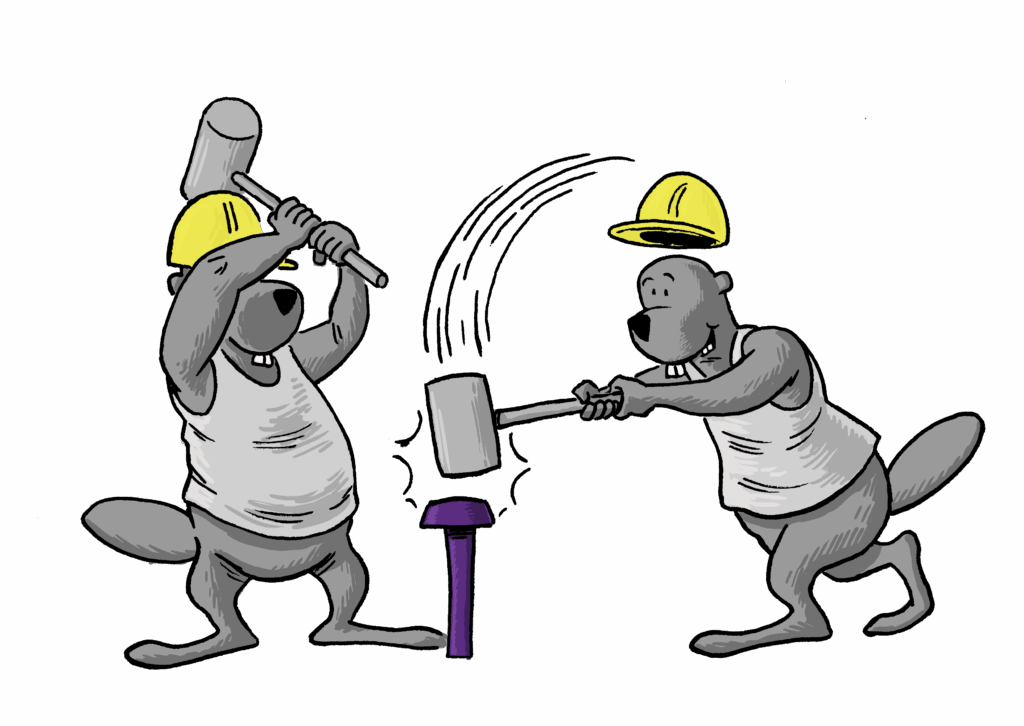
Outside of the TDF ‘strategy’ bubble – I would also like to acknowledge all the good and decent TDF staff with real experience of FLOSS projects that we have collaborated with around the code for many years very happily to do amazing things: we respect your service, competence and commitment.
What’s next ?
We have bold and ongoing plans to create an entirely new, cut-down, differentiated Collabora Office for users that is smoother, more user friendly, and less feature dense than our Classic product (which will continue to be supported for years for our partners). This gives a chance to innovate faster in a separate place on a smaller, more focused code-base with fewer build configurations, much less legacy, no Java, no database, web-based toolkit and more. We are excited to get executing on that.
To make this process easier, and to put to bed complaints about having our distro branches in TDF gerrit, and to move to self-hosted FOSS tooling we are launching our own gerrit to host our existing branch of core, more details on how git works here. To get involved this will mean creating a new account on the system and a few hours of disruption while our CI systems are moved over. We will continue to make contributions to LibreOffice where that makes sense (if we are welcome to), but it clearly no longer makes much sense to continue investing heavily in building what remains of TDF’s community and product for them – while being excluded from its governance. In this regard, we seem to be back where we were fifteen years ago. Meanwhile TDF continues to hire developers, sells LibreOffice and starts to act more like a staff-controlled collective than a Free Software project.
For our Customers and Partners
 By choosing an Open Source solution, your Digital Sovereignty is protected, and by getting support from a responsible enterprise you can be sure that you have support today. Collabora is committed to supporting its products for the long term, often three years from their release, and stands behind them in many ways. When we launched the new Collabora Office we made clear that we plan to keep supporting our Classic product for the forseeable future too.
For fun & friendly developers
If you would like to get involved with something exciting and new, to develop in good company, in a community with a low tolerance for talkers-not-doers – please do join us and get involved and chat on matrix. We have weekly face to face meetings, tea-time trainings on aspects of the code, and of course we would love to see you in-person at our conference in Hamburg next month: COOL Days for talks, team building, and much more. Meanwhile, why not try out an easy hack.
Postscript: some readers still really struggle to believe this is accurate, it seems like a bad joke; but in fact we really were just ejected, so we really will go and do something better.
Update: 2026-04-07: Ending speculation?
I note that The Document Foundation’s (TDF) blog post entitled, Let’s put an end to the speculation, contains a lot of mud throwing. Some of that content is misleading, defamatory as well as being factually inaccurate. I believe that the accused volunteer board members have tried in good faith to act in the best interest of TDF based on the best information they had at the time. Sometimes more information comes to light later, and then it is necessary to change approach – that is normal, and what has happened. It is completely unreasonable to attack those who at the time saw a different picture.
There is no point in re-opening the 2019 discussion around unifying existing companies’ distribution of LibreOffice in app-stores and bringing them under TDF’s leadership inside a new, responsive entity: The Document Collective (TDC) – since this was never actually created. It seems to be a distraction.
Blaming others
Is this just an attempt to deflect attention from the gross injustice of excluding so many blameless and hard-working long-term contributors? It is claimed this was necessary this year to achieve a positive outcome in an audit which completed last year (but which contained no mention of this expulsion).
In reality a non-consensus subset of TDF’s board took this aggressive action, apparently for personal political gain, creating retrospective rules while ignoring wiser advice from other well-respected independent board members. It is even more surprising having kicked out the biggest contributors, to blame their departure on them wanting to “kill” TDF.
What is the purpose achieved by removing dozens of people, who happened to have a colleague, who years ago volunteered on the TDF board, and made a decision today’s ruling clique don’t like? For all the talk of legal issues, it is strange to get no confirmation of the following ask around the bylaw change that enables this:
“Has this text been checked and confirmed as being fully compatible with the statutes by a qualified and insured Rechtsanwalt in Germany who has suitable liability insurance and is a member of the bar?”
What next?
We have been trying for some years to understand and settle these supposed problems in an efficient and effective way. Many appear ridiculously easy to settle. Others seem generally unreasonable – eg. encouraging companies to sign bespoke trademark licenses they don’t need, and then attacking them for shipping code which could have been covered by the general trademark terms available to all.
The suspicion has been that the persistence of apparently contrived problems and the permanent sense of crisis, have been politically useful for the current board majority. They give a pretext for suspending good governance: overturning an election, over-staying terms, polarising the community, and so on.
Mediation has been mentioned. Indeed this was recommended long ago by the Advisory Board, but stopped before it started. Now encouragingly it is re-attempted some years later. My hope for mediation is that instead of hearing a litany of “problems for every solution” – we will finally get some timely responses to our various generous offers to help solve TDF’s problems.
Many commentators have wisely pointed out that all of this is a massive waste of time, effort, focus and so on – it’s hard to disagree with that – we would like to move onwards and upwards.
Update: 2026-04-11: Q&A?
I note that while TDF’s blog post entitled, Q&A about media articles, contains some helpful corrections, it also piles on even more mud throwing. Some of that content is misleading and defamatory, as well as being factually inaccurate.
Let me briefly expand on one of the problems hidden there: of anachronism. TDF’s board of ~ten typically takes a long time to come up with a clear decision as to what the right thing is to do. It is particularly distressing then when the legal advice that informs that decision suddenly changes. Again, it is my contention that the accused volunteer board members have tried in good faith to act in the best interests of TDF based on the best information they had at the time.
Let’s have an example: selling LibreOffice in app stores. The initial investments to make it possible to sell on the Mac app store were done, in public, by Collabora over a decade ago. We used the public Trademark (TM) guidelines like any other distributor, and at the time the legal consensus was that TDF should not be charging for LibreOffice in app-stores.
Subsequently, this legal position changed 180 degrees, and today TDF is itself selling LibreOffice in app stores. Amazingly, there are also now claims that structuring TDF’s work to previous advice was somehow inappropriate.
Similarly, while it was not necessary for Collabora to sign a TM licence to do this, TDF approached and asked us to sign a free of charge licence, which we did. In recent times, the view within TDF has changed somehow and they now demand that we should pay. As an aside, throughout that whole time we voluntarily donated >15% of our app-store income to TDF, and we did this all transparently.
Another example of a concern is around tendering. I wrote a clear statement on this from 2023 that explains the facts, but again – the legal structure around awarding those contracts was led by non-bidding board members and TDF staff, not us.
Naturally, if counsel changes, the board needs to adapt, and each time it has. Better – Collabora has consistently and repeatedly signalled a willingness to talk and proposed generous offers to help solve TDF’s potential issues. Unfortunately, this (aside from Italo’s rather positive work at resolution) has been met with a blank wall.
No Collaboran has been on the TDF board for in excess of two years. So who in this time period has been “postponing” TDF from reaching out to explain their concerns and come to a sensible settlement? Why are legal disputes being created and inflated when there is/were generous offers to help fund TDF solve its own issues? Why no prompt interaction if the risk is so extreme? Instead, we have had years of delay, followed by the ejection of Collabora’s hard-working contributors because their colleagues (many years ago) were part of boards that made decisions that today’s board didn’t like—this is a clearly unbalanced and unnecessary response. A simpler approach would have been to prioritize solving this over other apparently less existential topics, or once again not having any ecosystem-affiliated staff members on the board.
In an environment of such long, complex, and obfuscated timelines, involving private counsel, discussion, and action, it’s hard to disentangle cause from effect. Stepping back and looking at the big picture and seeing where TDF is today can help: what changed? And who calls the shots? Ecosystem-affiliated contributors have been substantially excluded from board participation for years. Their staff who contribute have just been ejected from membership. TDF staff appear to have consolidated their control over the organisation. TDF staff calls have become completely private (even from the board). Other private staff+board meetings replace previously open community brainstorming and planning around TDF’s future. These meetings seem to exclude even TDF members, with a claim of “public discussion” after decisions have been made. That sounds extremely hollow, and a similar claim was made regarding the radical bylaw changes recently, where even basic questions were not answered. This is not at all encouraging; but let’s see how it all turns out.
Meanwhile, despite the aggressive reshaping of what was intended to be an open, meritocratic Free Software project, we continue to stand ready to help TDF investigate and seek solutions to these potential issues in a mediation.
Update: 2026-04-17: Openness or guilt by association?
A quick update, TDF have continued posting more blogs on this topic; first an Open Letter to Collabora Developers to which it seems Mike Kaganski responded with some facts. A three+ year ejection until 2030+ doesn’t seem like a “temporary inconvenience”, or very open. Staff volunteer directors are unfairly confused with company representatives, but as helpfully it clarifies that stopping staff voting was the goal. It seems the circular argument is: The Document Foundation (TDF)’s board decides what is in TDF’s interest. If we include staff they may vote for candidates that promote collaboration. Collaboration conflicts with my view of TDF’s interest. So we must stop them voting for such candidates. While not the most convincing argument – if someone is convinced that they alone know what is best for TDF this could appeal I suppose.
Then today we have another blog, The Foundation is Strong, which seems to claim that LibreOffice is “not a product”, although TDF does sell it in App stores. It makes misleading claims; again, there is no confirmed misuse of funds in the most up-to-date audit.
One of the saddest quotes here (emphasis added) is:
“But a foundation even partially governed by the people associated with its largest commercial contributor is not a foundation but a subsidiary.”
This is probably news to normal FLOSS projects. Generally, they welcome contributions from everyone commercial and otherwise, and encourage them to work together in peace and harmony. That is often hard enough without contriving new divisions between those who love the code. I do not believe that having some company staff in the electorate implies “capture” of a project. Collabora has also not had any staff on the board for years, and TDF has many limits that giving extremely robust protection here.
If you want to be involved in a big, fun, grateful project that credits and encourages its contributors, why not get involved with Collabora Office, we’d love to have you.