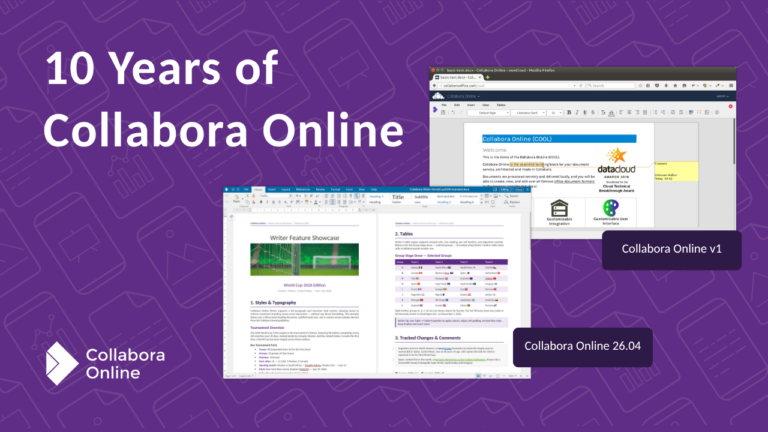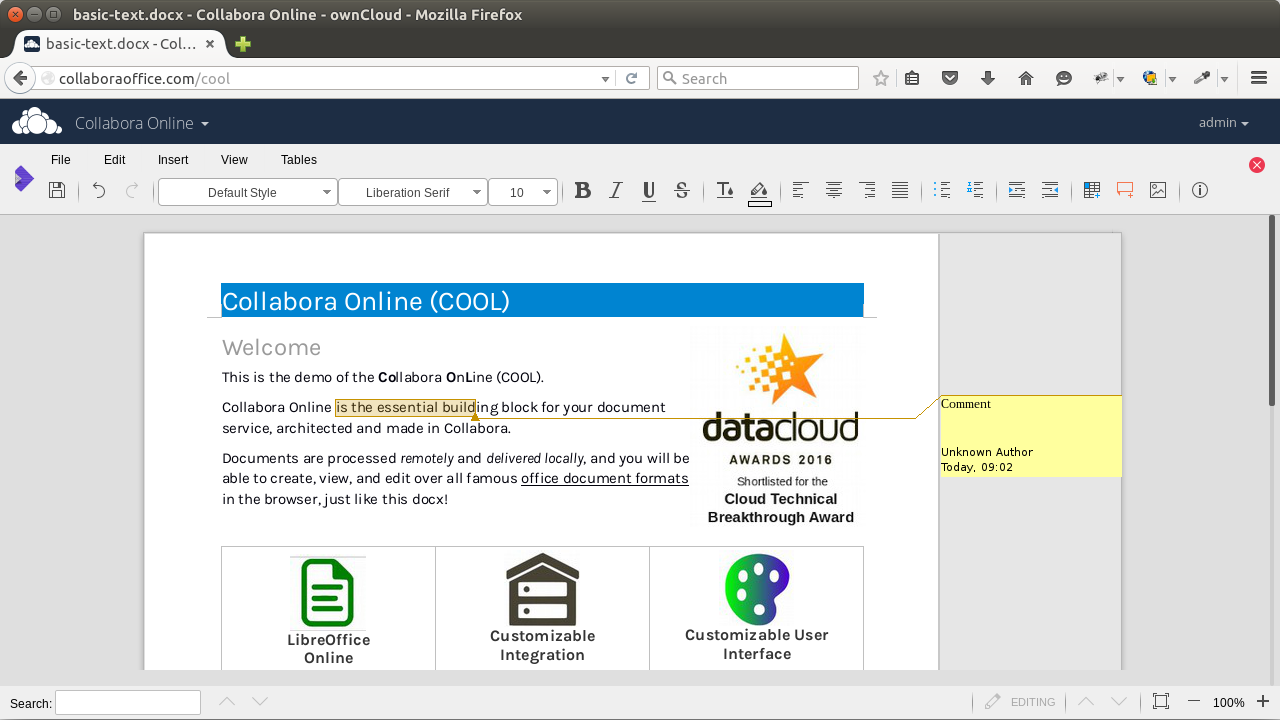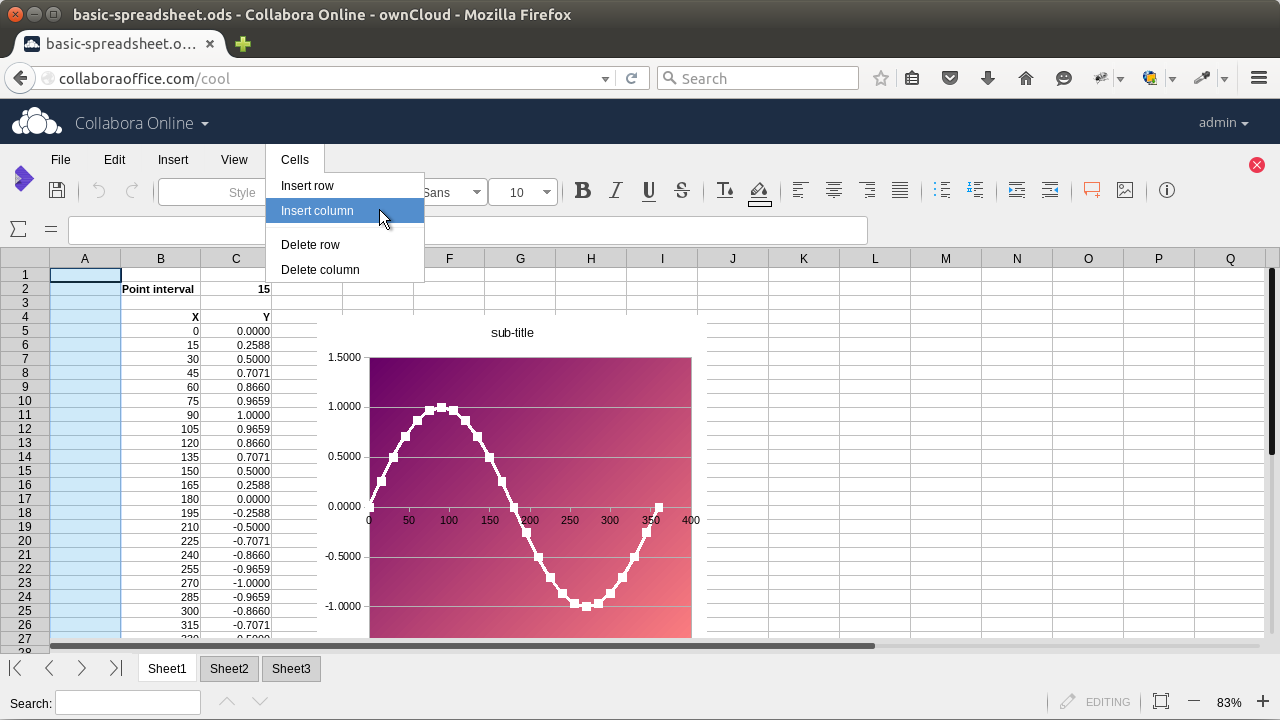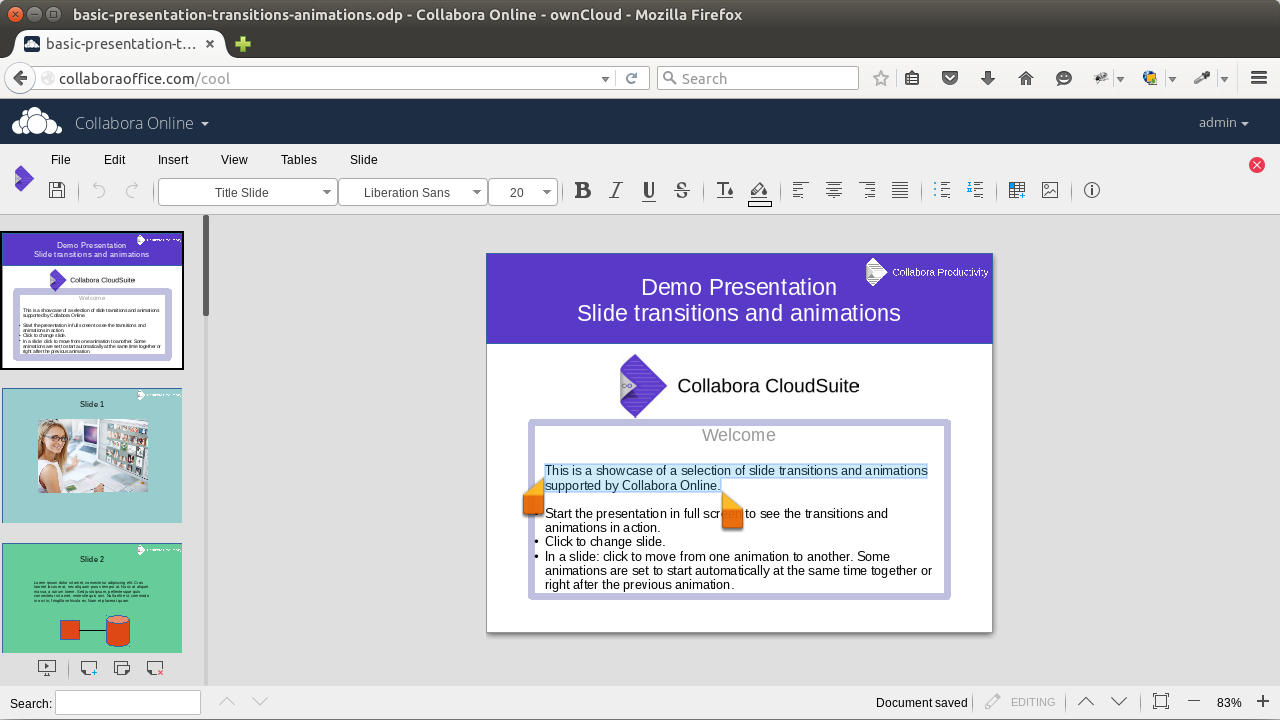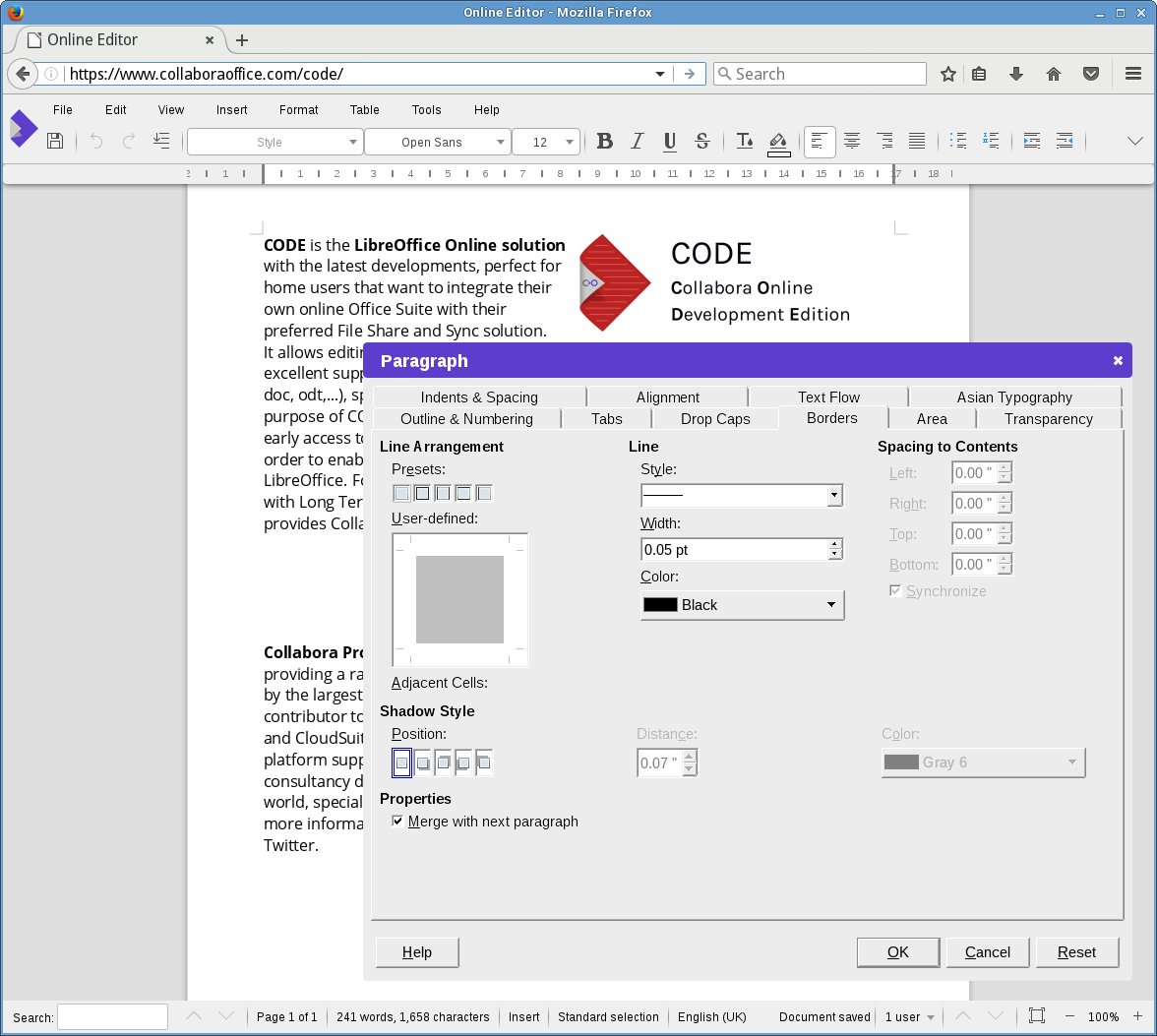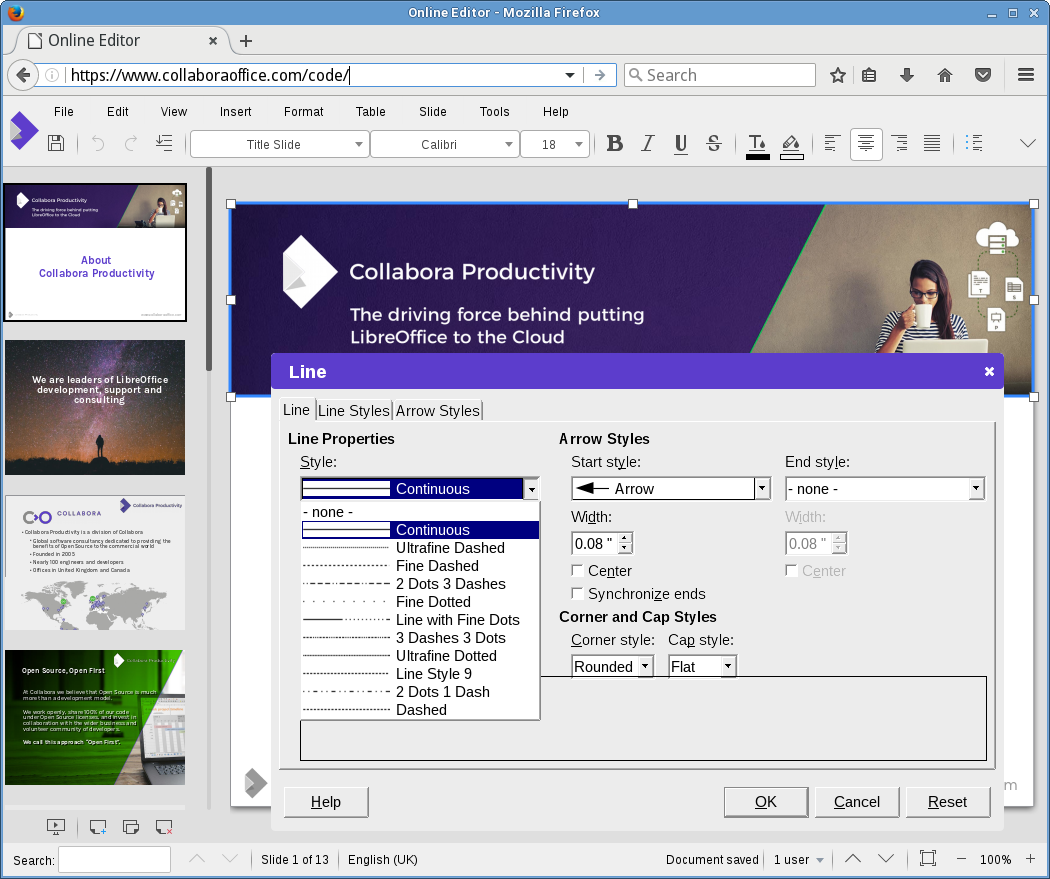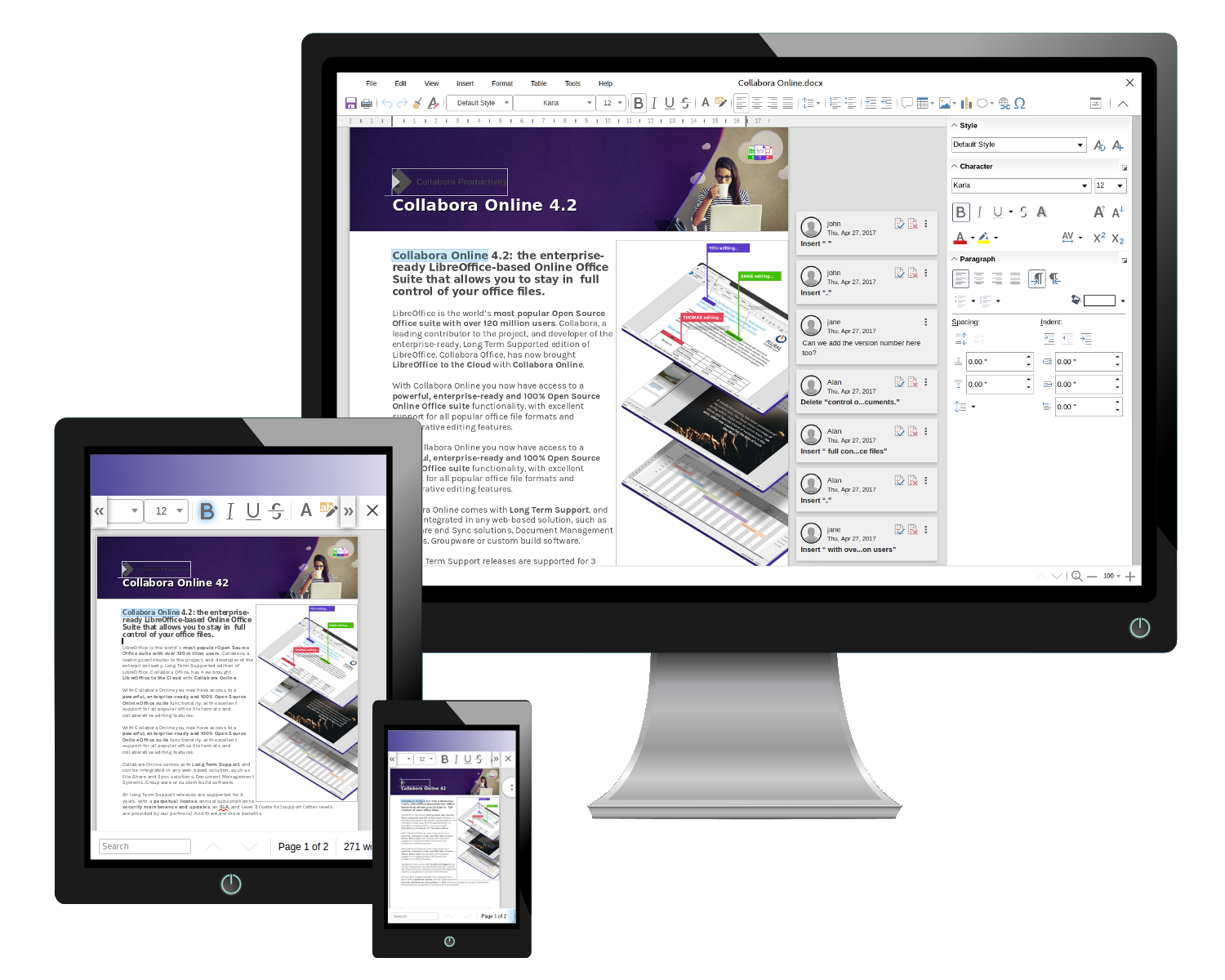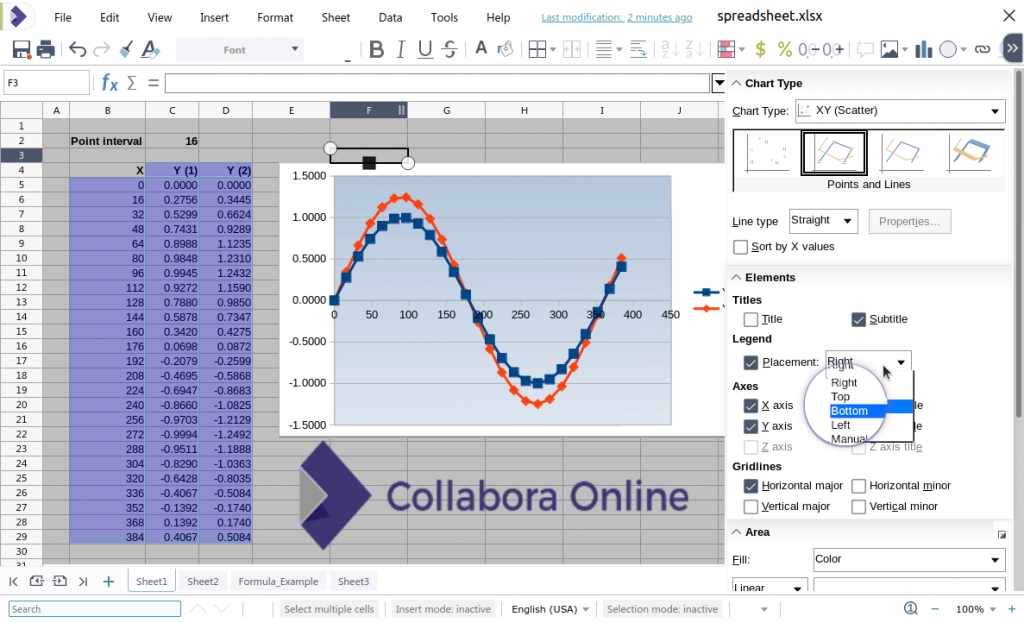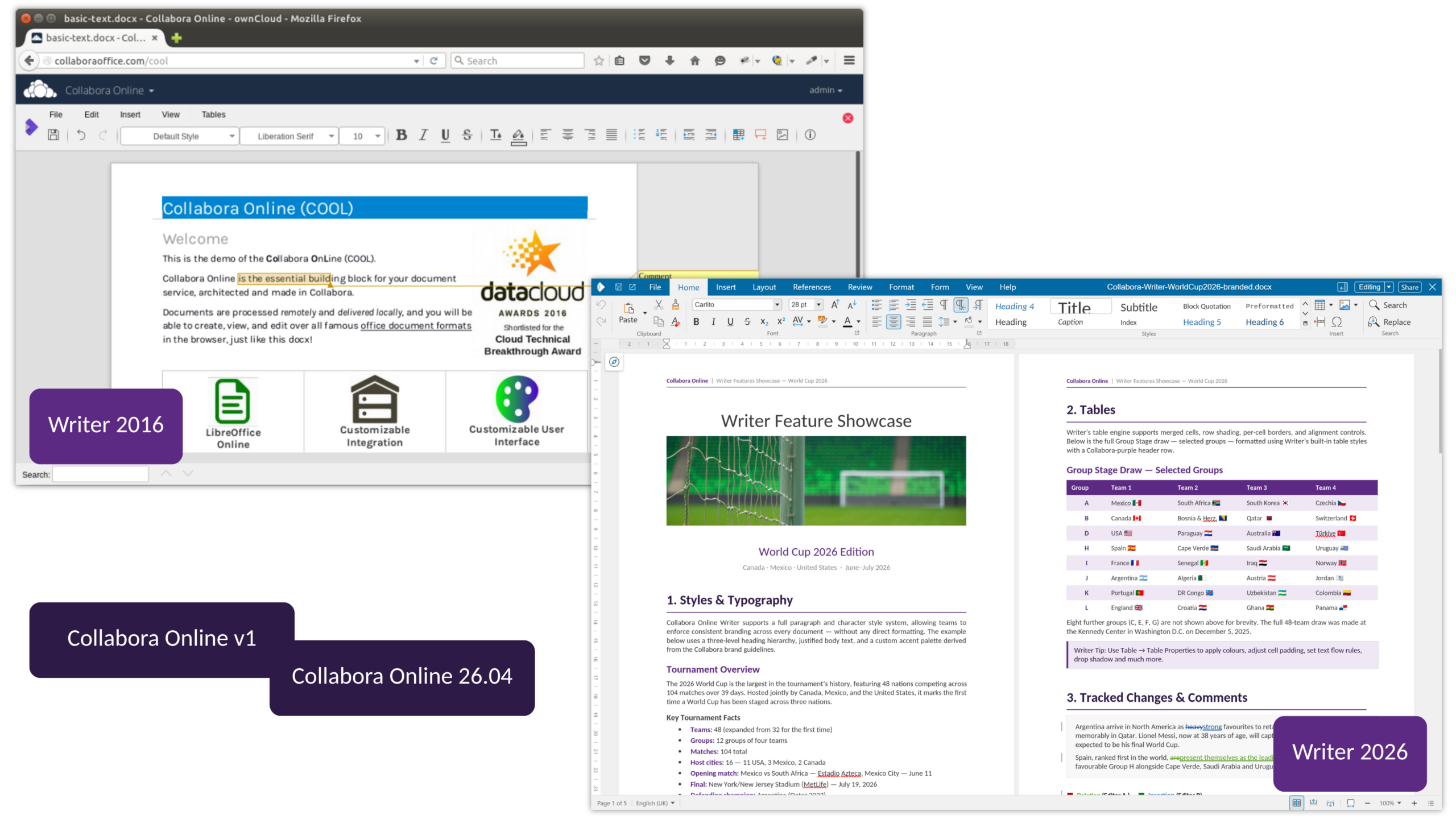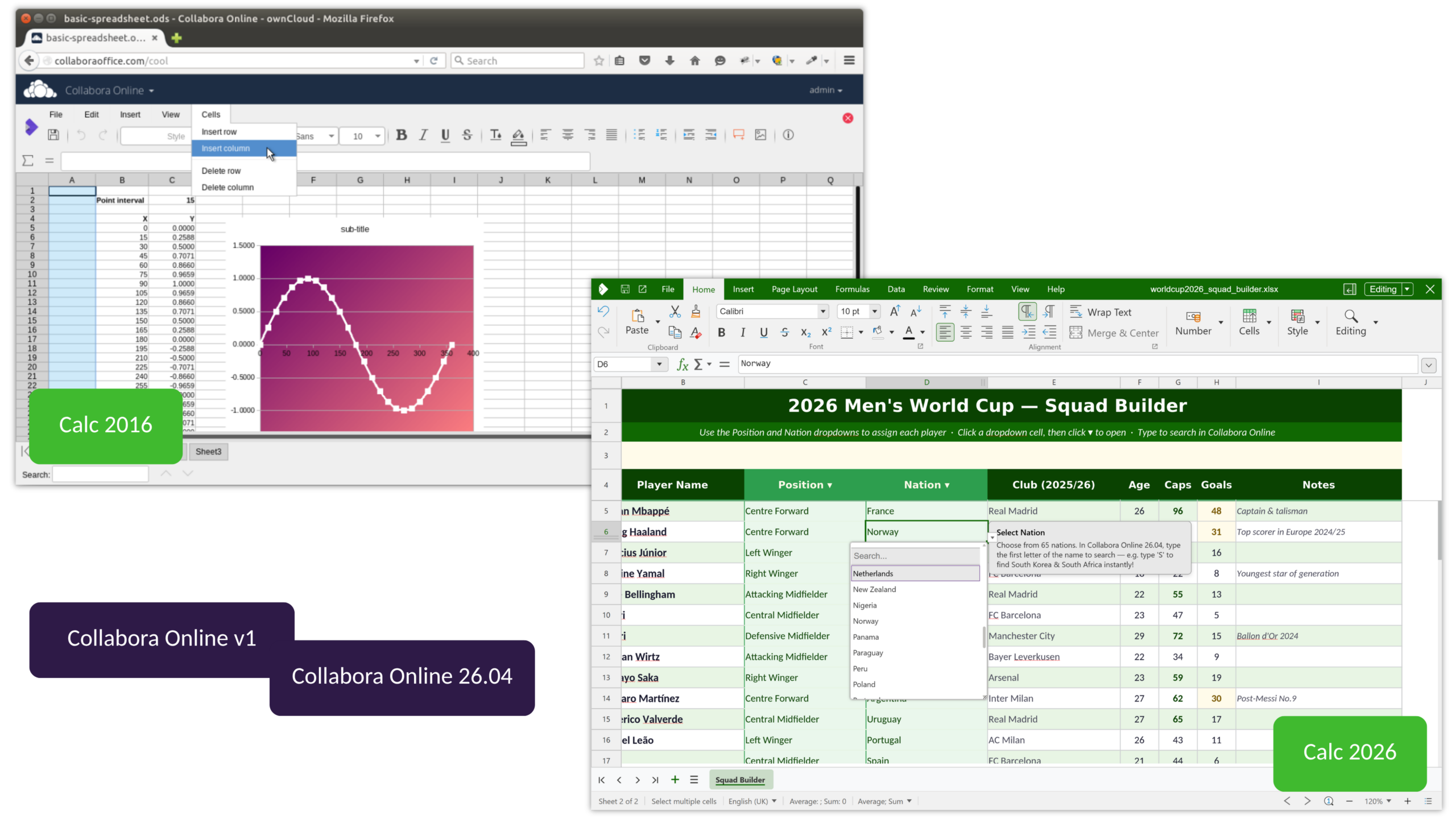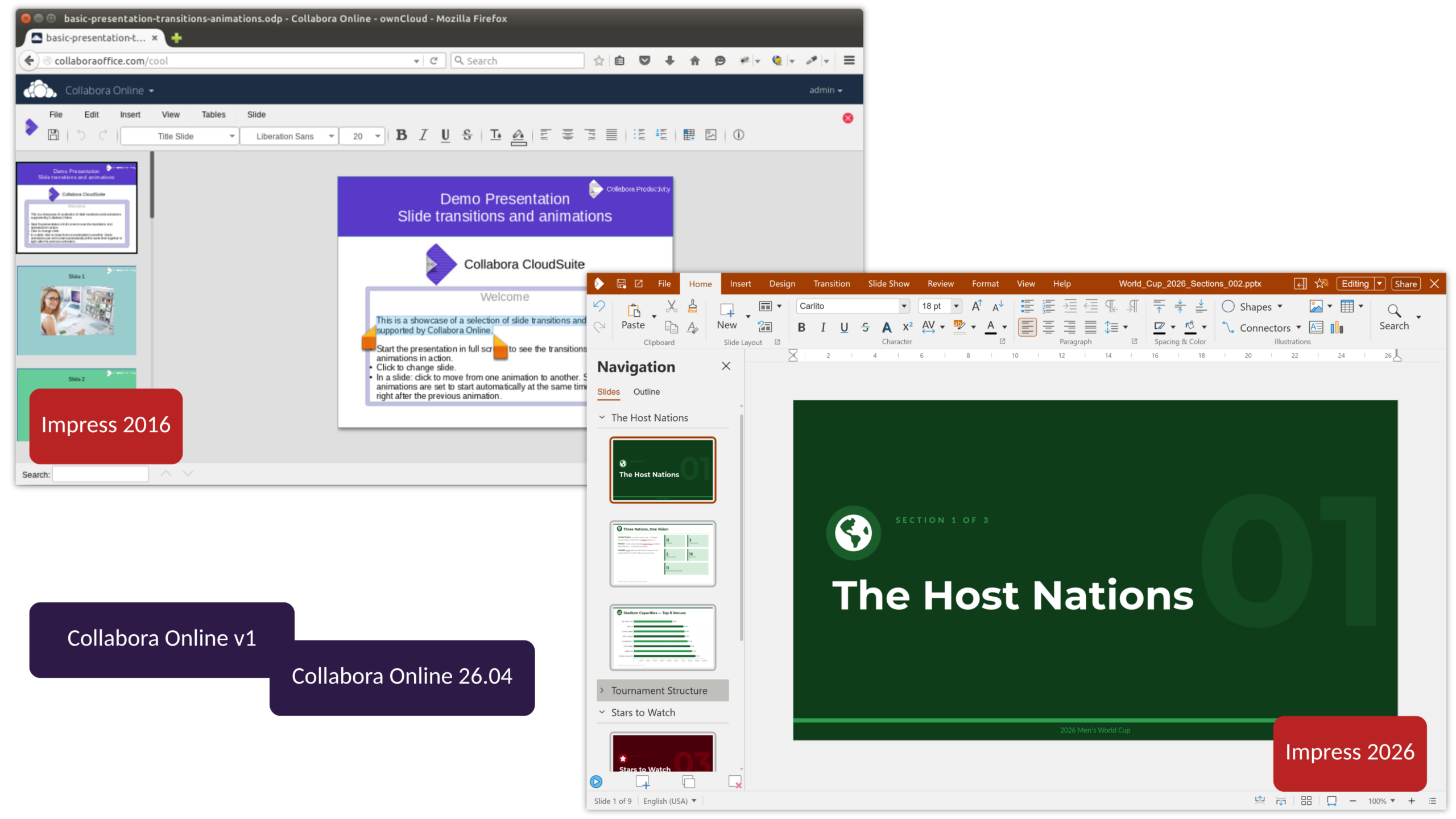

The journey so far:
Humble Beginnings
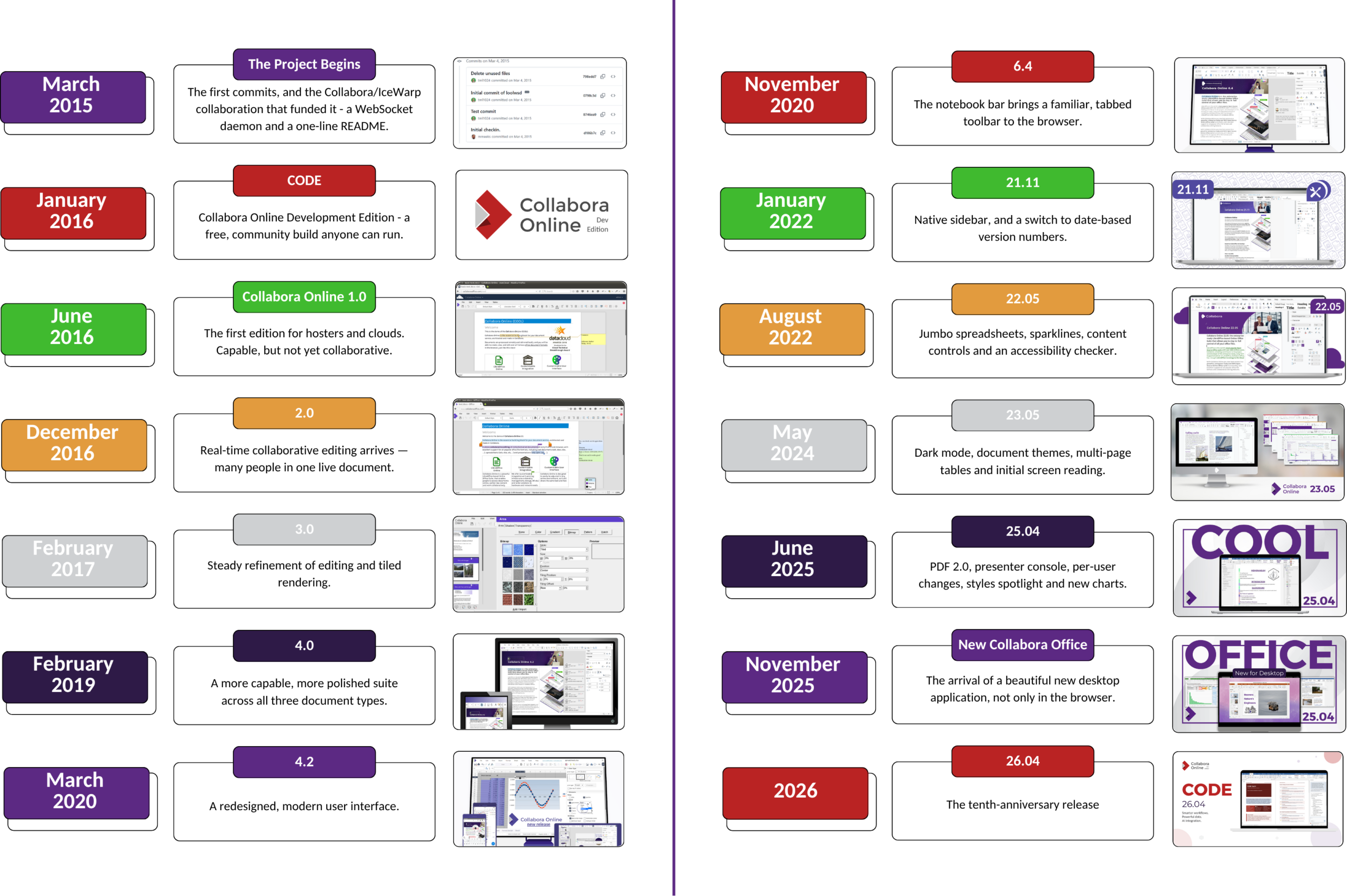
The very first release – Collabora Online 1.0 – shipped ten years ago, in June 2016! In many ways, the project traces back a little further: a flurry of commits in the spring of 2015, (and of course many decades of accumulated open-source office craft that made it all possible).
The very first commit, on 4th March 2015, added a single line README file, a few weeks later the collaboration between IceWarp and Collabora to bring open-source document editing into the modern browser was announced on 25th March 2015, and it’s no exaggeration to say none of the following development would have happened without that first leap of faith.
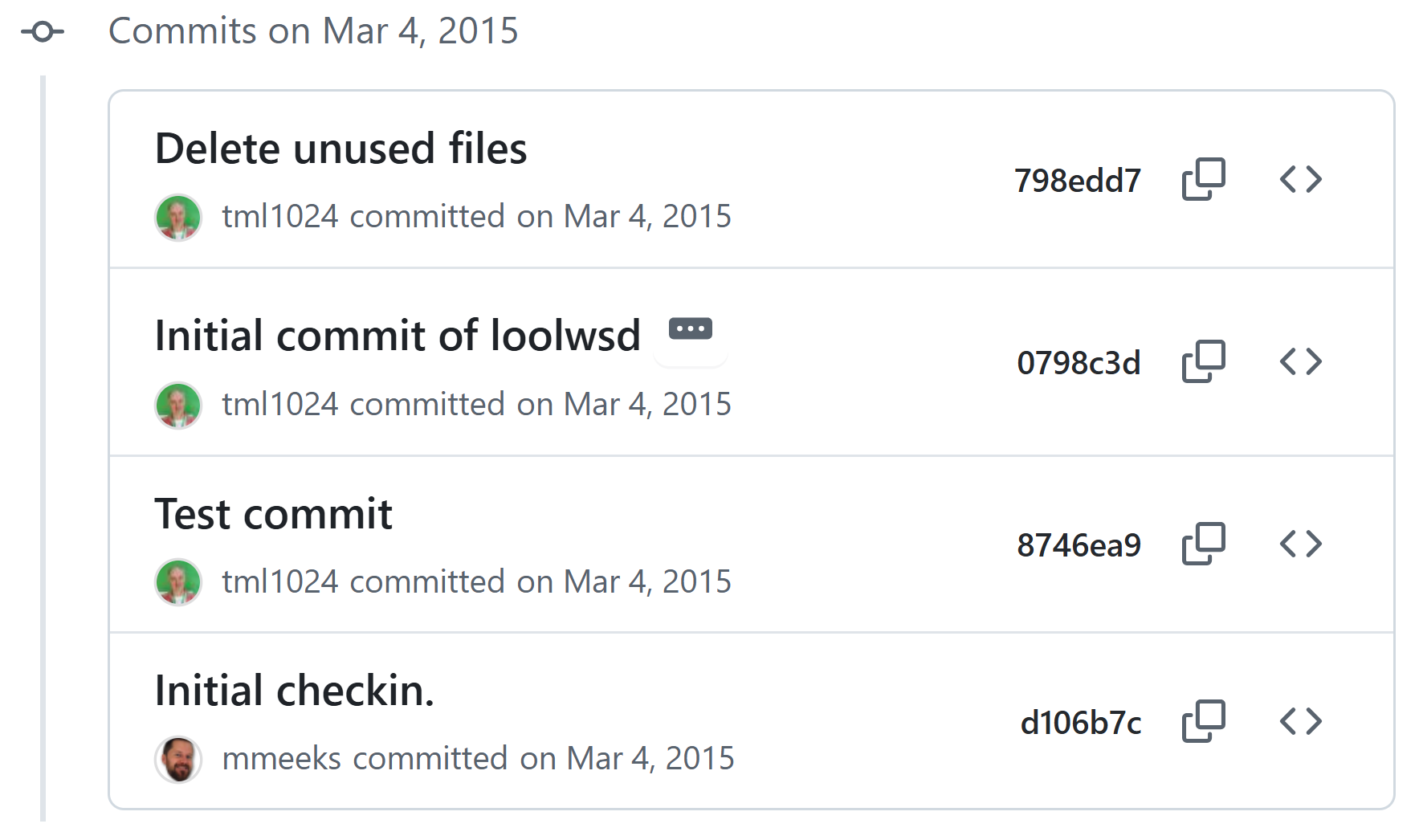
Two days after the first check-in (after a quick test commit to make sure the lights were on), the first real code landed – Tor Lillqvist’s “Initial commit of loolwsd” — 8 files, 775 lines, and the bones of the server we still run today.
The plan was to push rendered document tiles down to the browser over a low-latency socket, cache them aggressively, and let the client do as much of the reading, panning and scrolling as possible without bothering the server at all.
Ten years on, several million lines of writing and rewriting, and a full collaborative editing suite later, it’s still the fundamentals of how we’re working.
From prototype to product
2015 was code. 2016 was product.
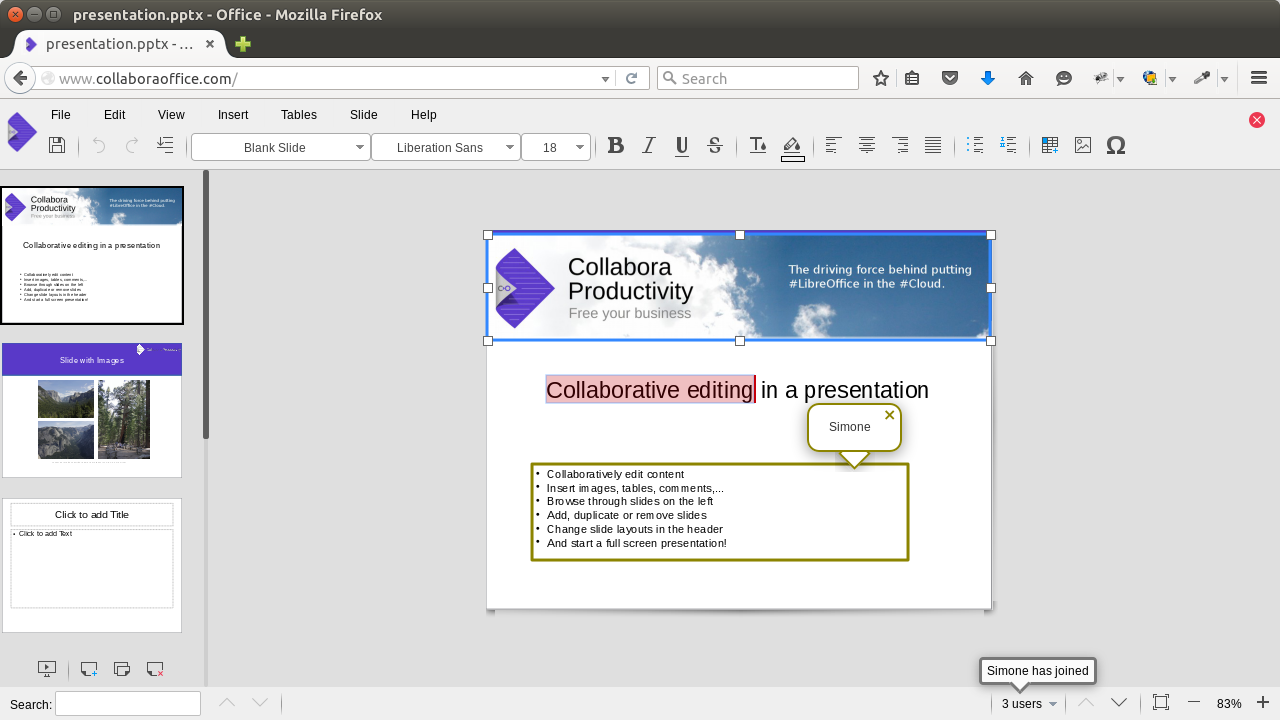
In January 2016, the very first Collabora Online Development Edition was released, giving anyone who wanted it a free, self-hostable build to run at home. Then a few months later, and now celebrating its 10th birthday, along came Collabora Online 1.0 – the first edition aimed at hosters and cloud service providers. It was a capable viewer and editor, with multi-user capacity, but only one user could edit the document at a time. Other participants would be constrained to read-only access, and the editing ‘right’ had to be passed from one user to another.
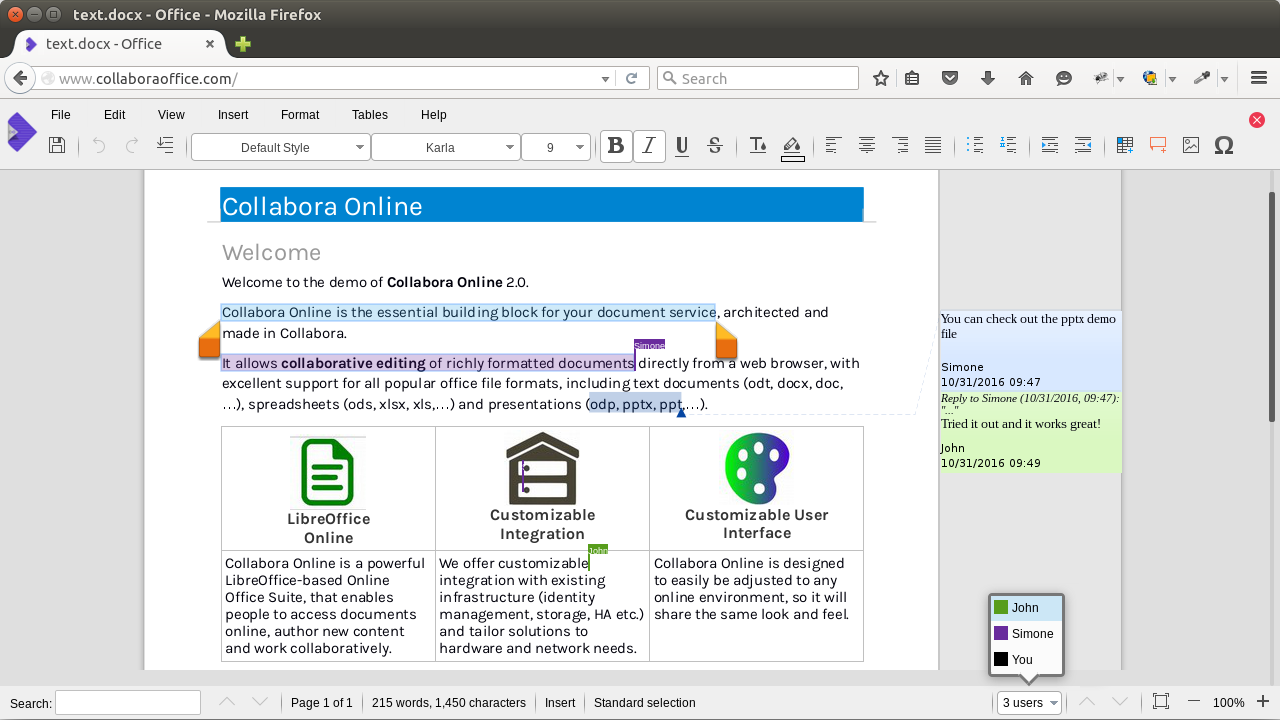
The last piece of the puzzle landed in December 2016 with Collabora Online 2.0, when real-time collaborative editing arrived and finally multiple editors or viewers could read and work in the same live document at once. Still a little rough around the edges, but the foundations had been laid for a powerful, secure, low-latency, multi-user editor.
Ten years on…
Across ten years of releases, we’ve been working on delivering a beautiful and intuitive UI, but the underlying philosophy has (mostly) stayed the same. A single authoritative rendering on the server, with everything else pushed to the browser.
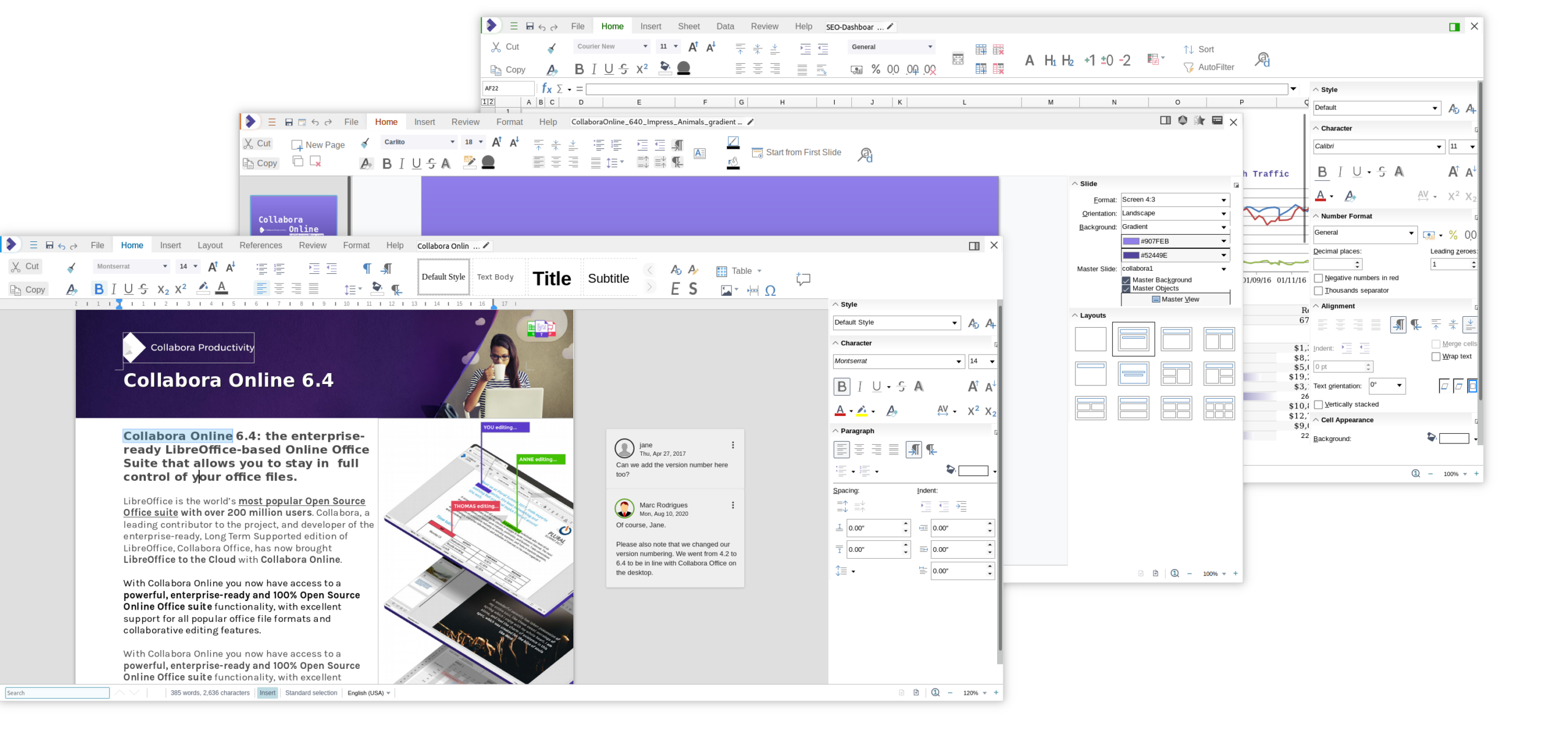
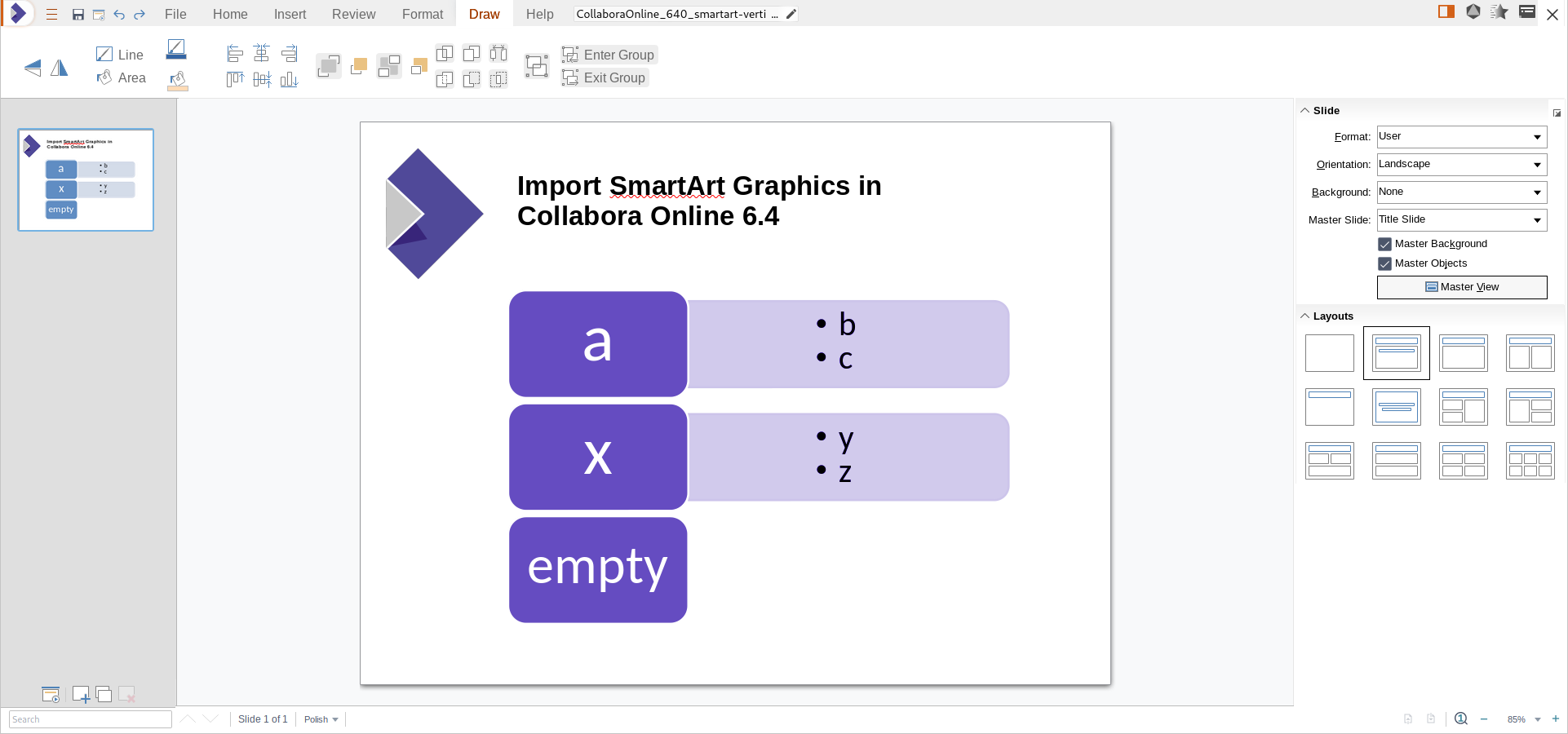
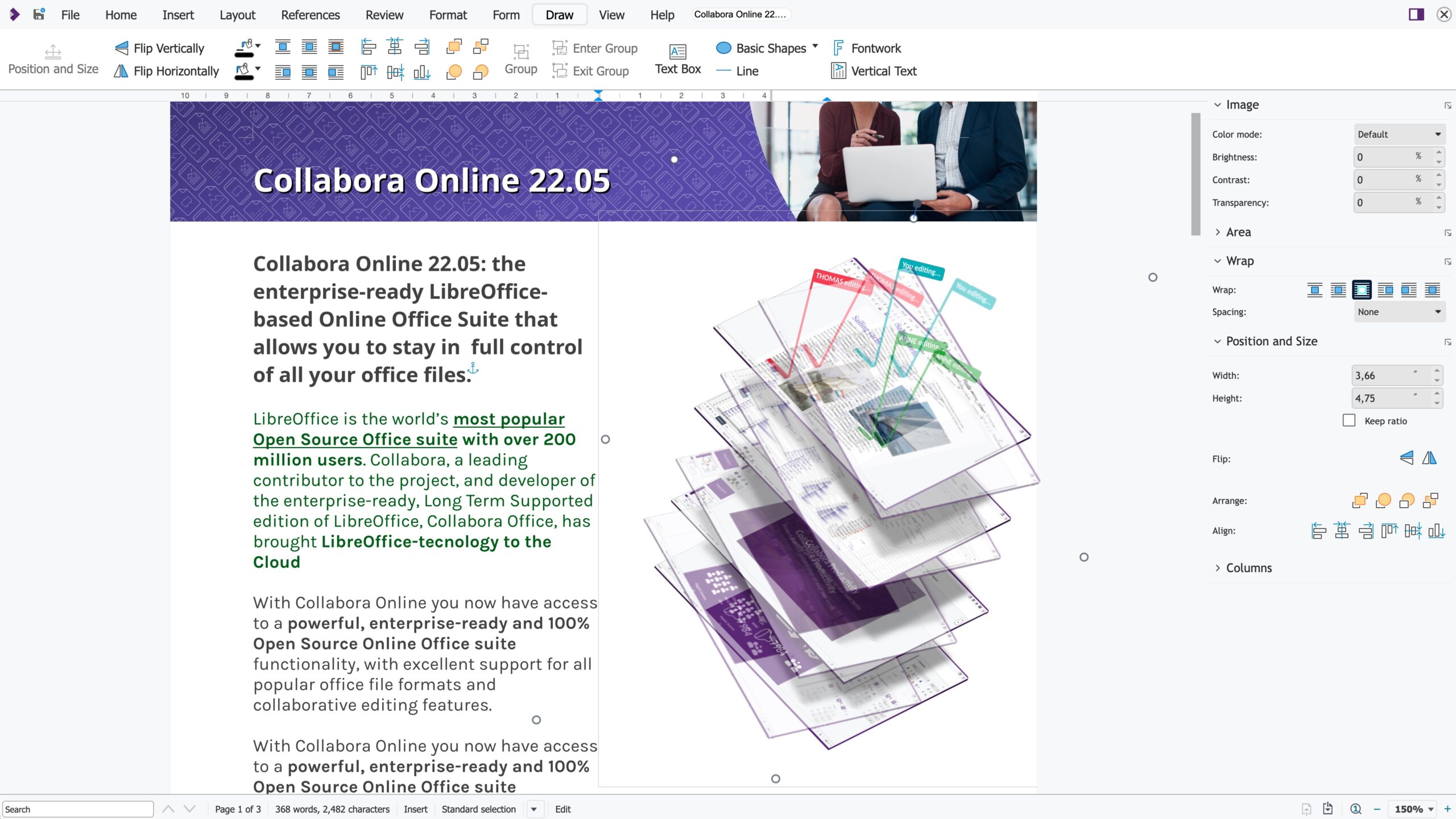
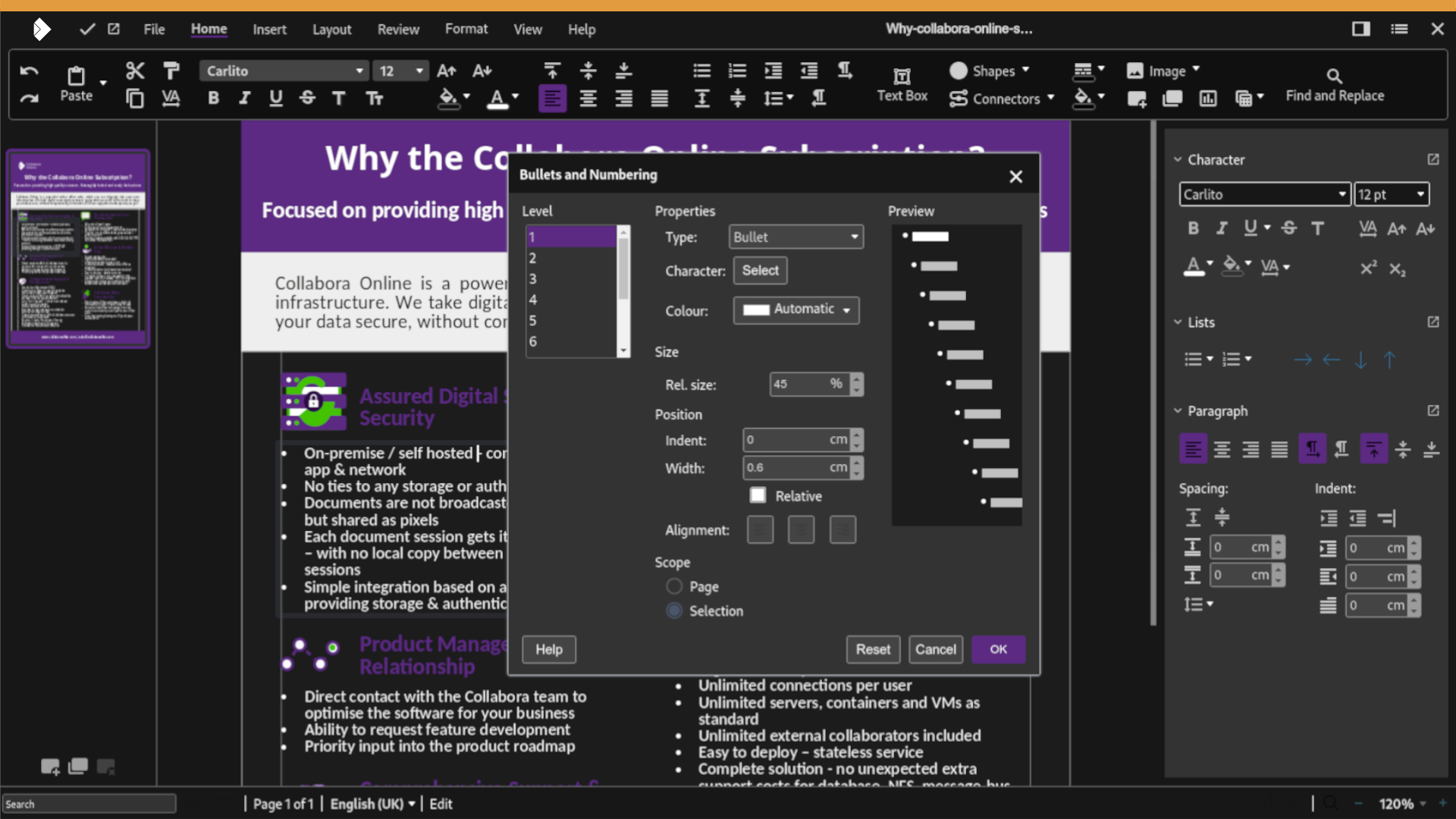
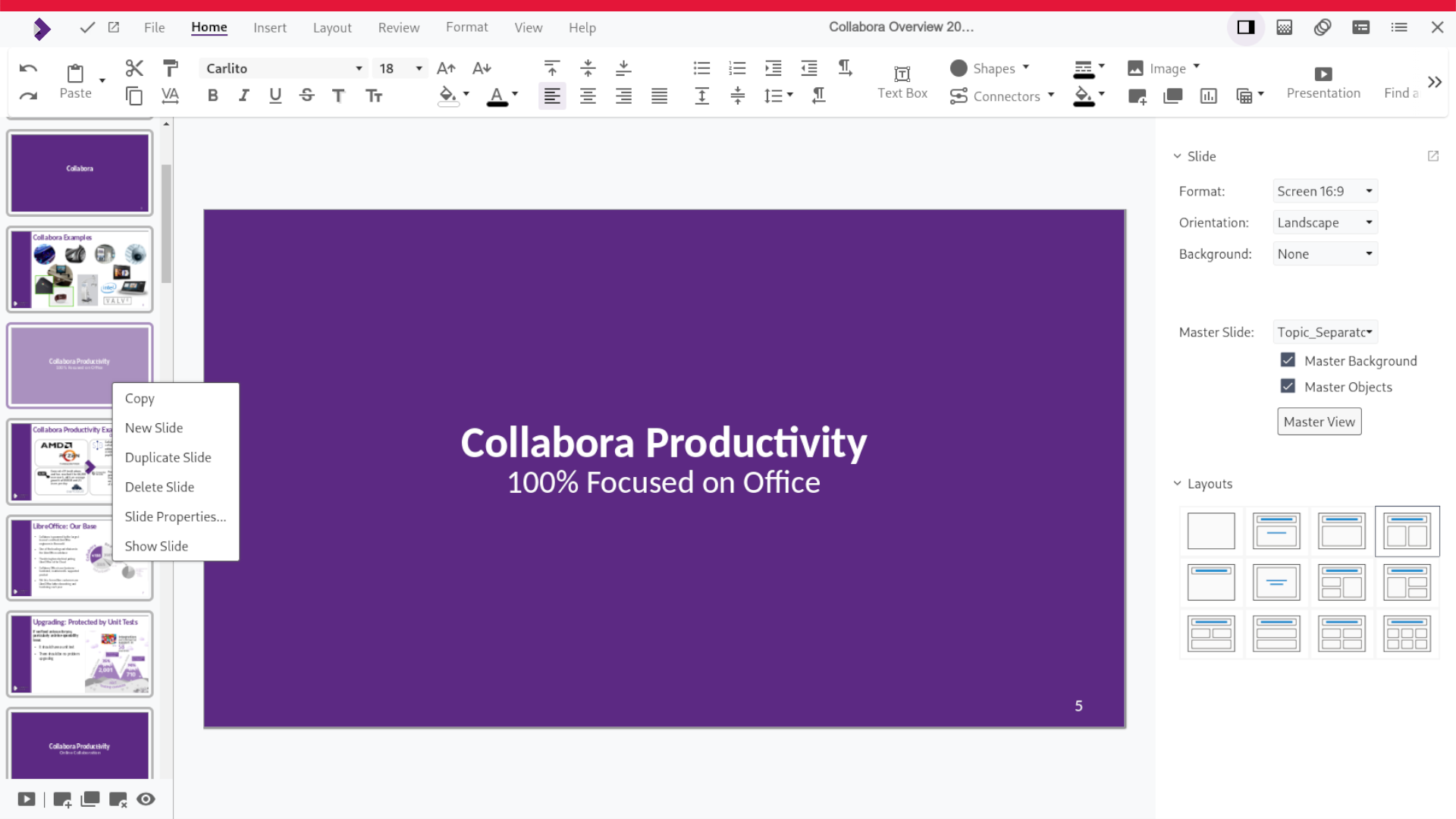
The interface grew up in public: a full redesign in 4.2 (2020), the tabbed notebook bar in 6.4, a native sidebar in 21.11, and in 2025 the biggest UI/UX refresh yet, driven by real usage data to make powerful features easier to find. (At this time we also switched from version numbers to a calendar scheme – YY.MM – to help people stay up to date with the latest features and editing goodness).
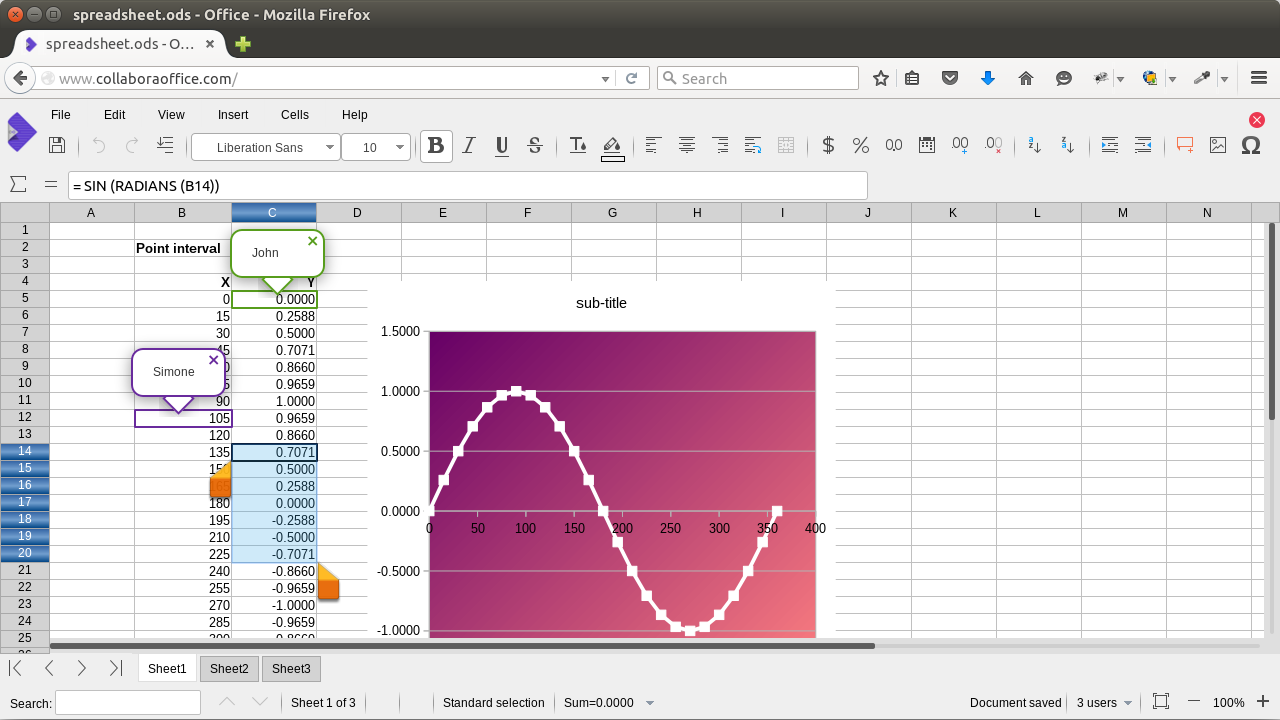
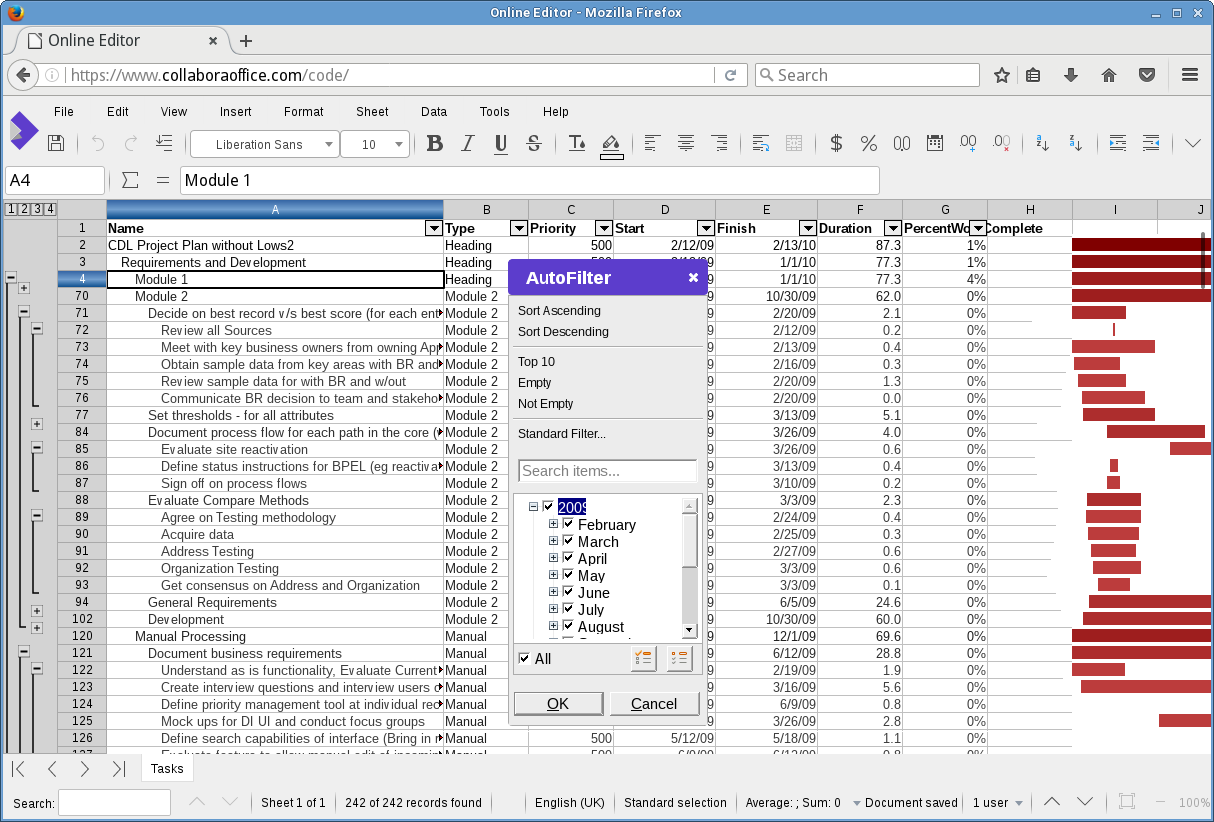
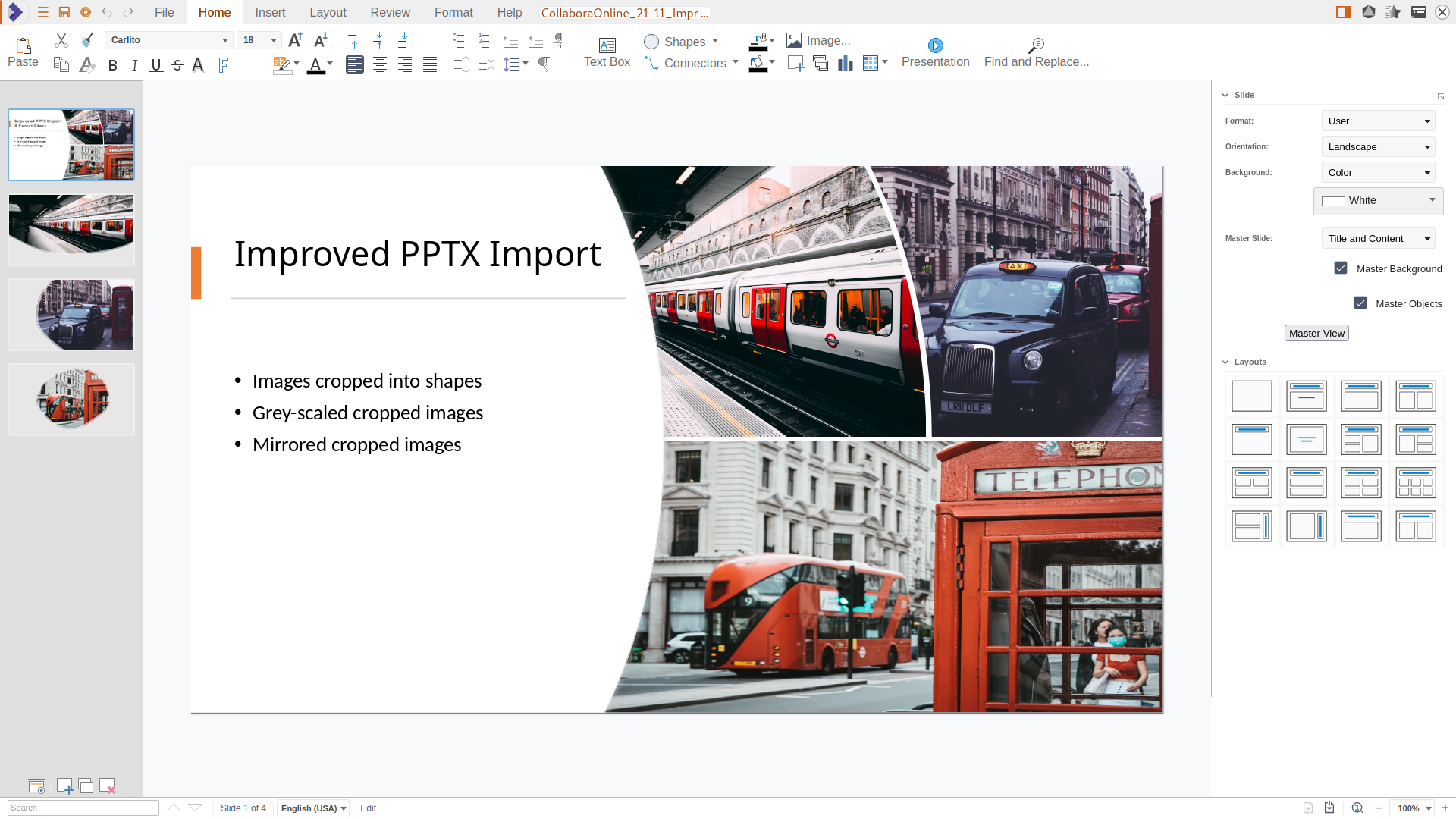
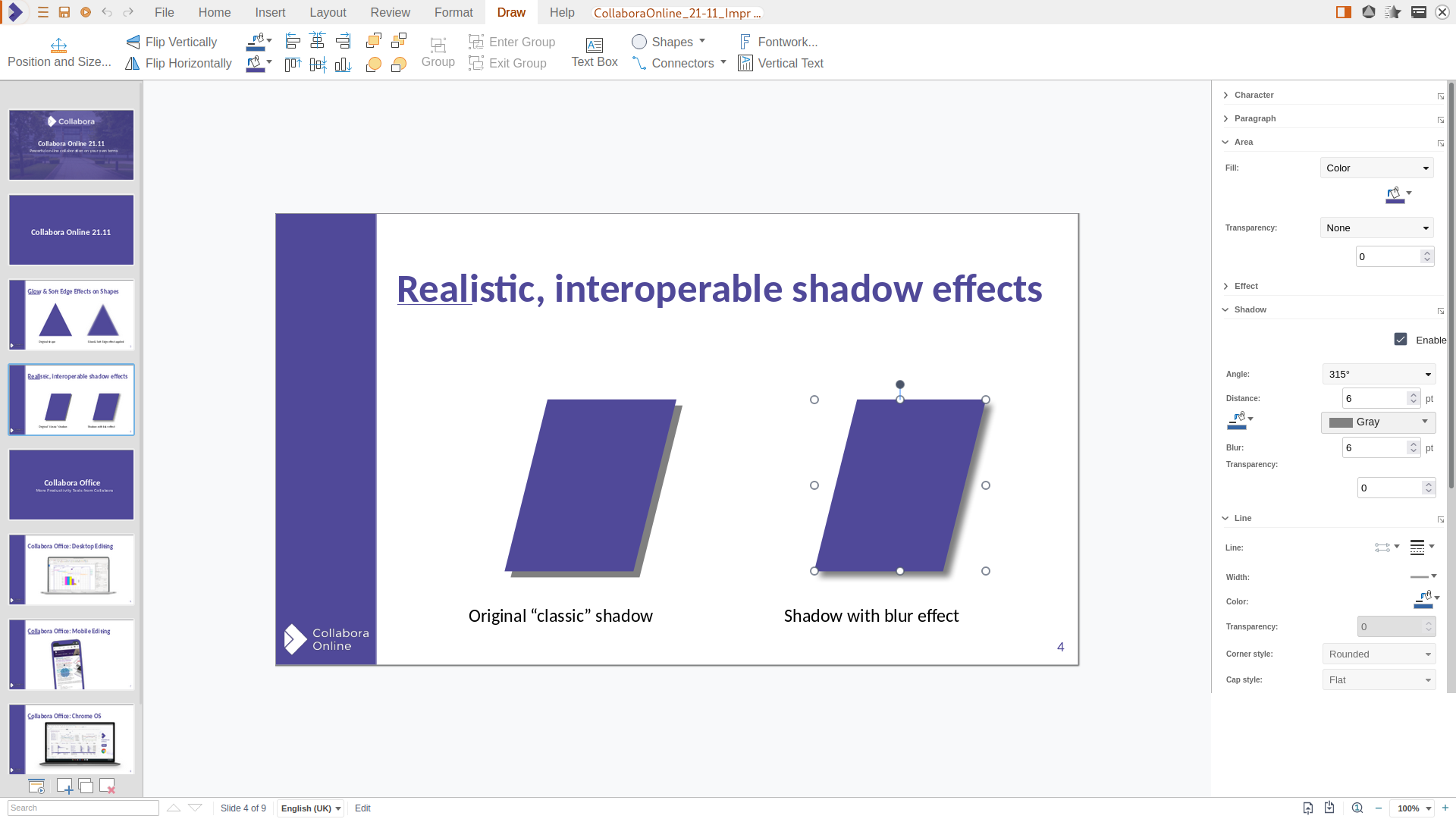
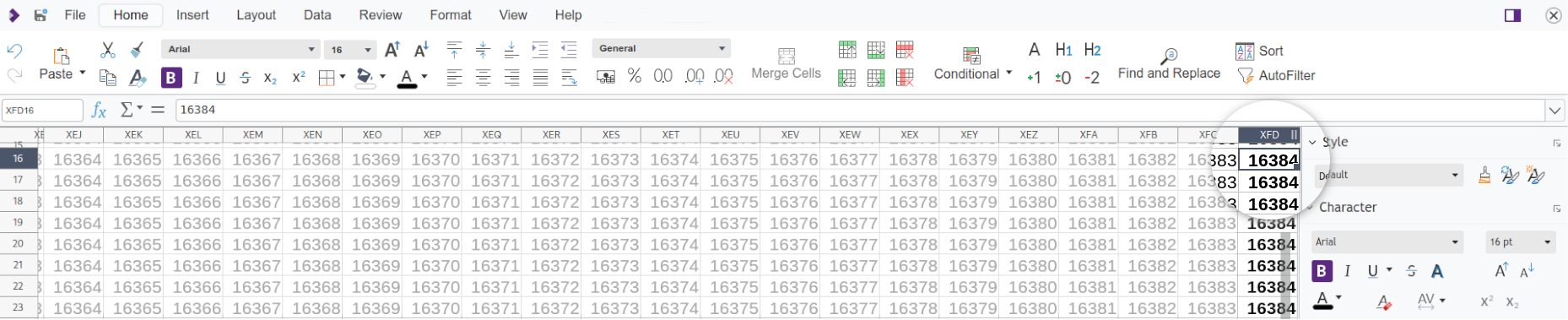
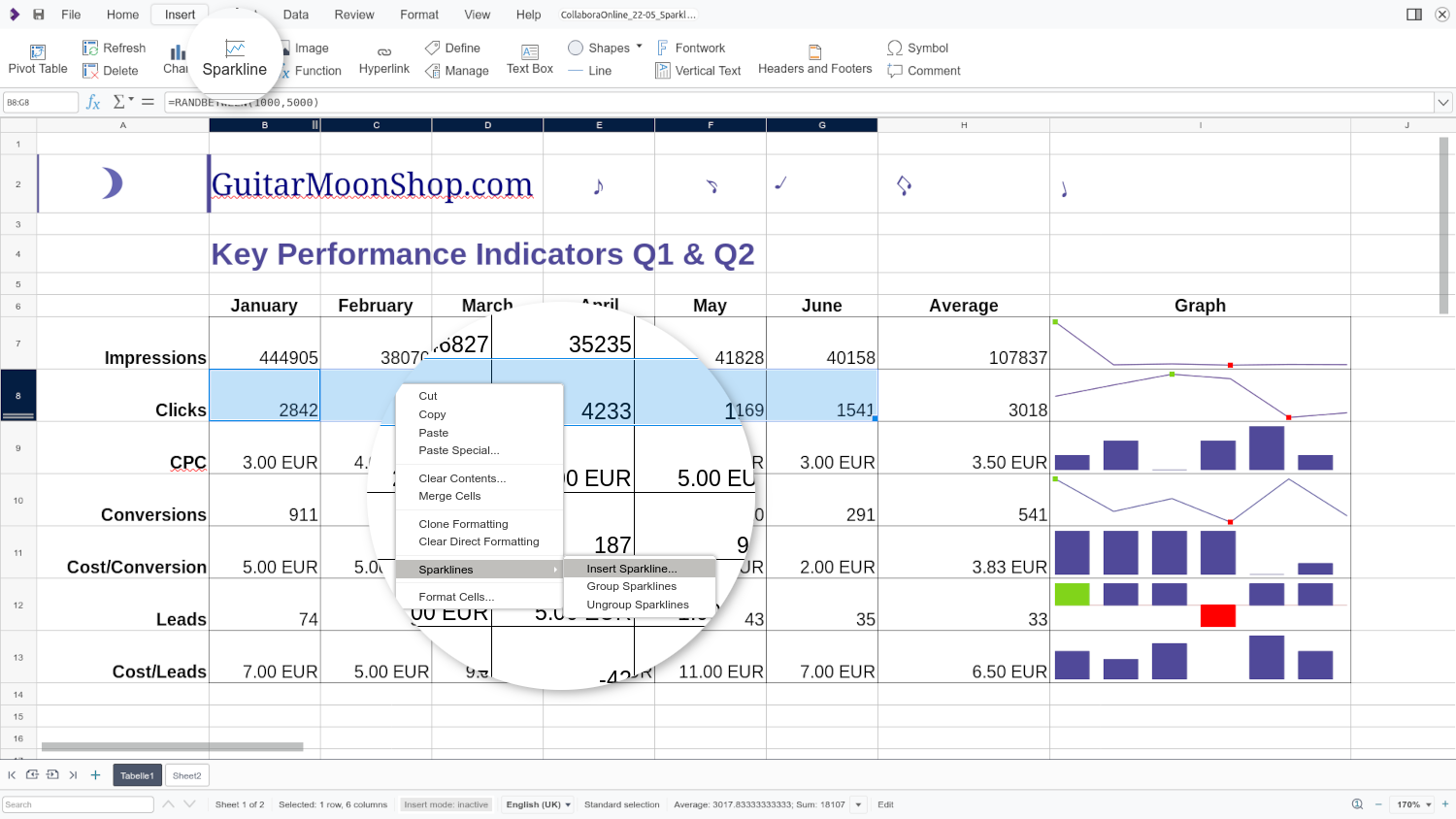
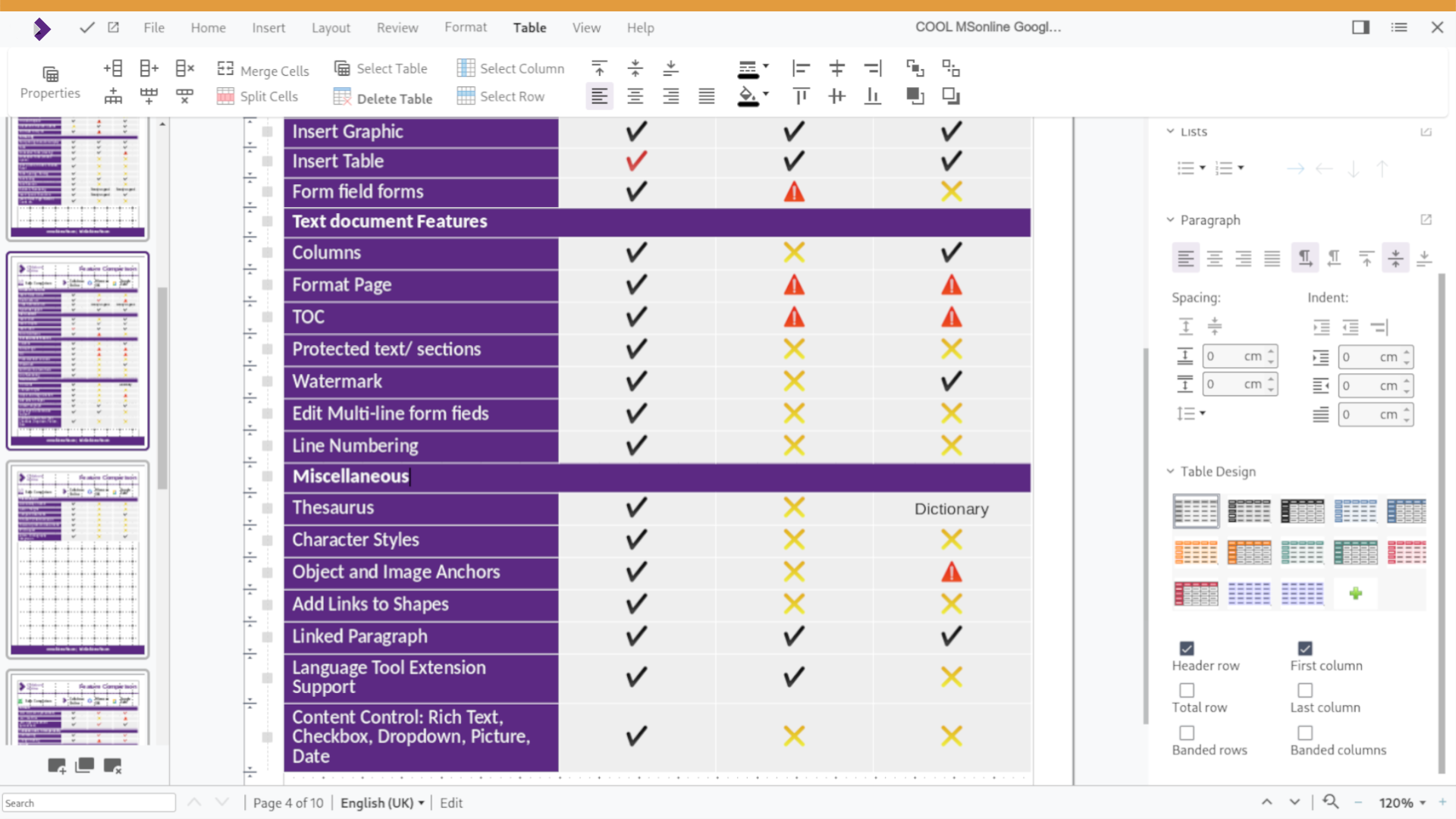
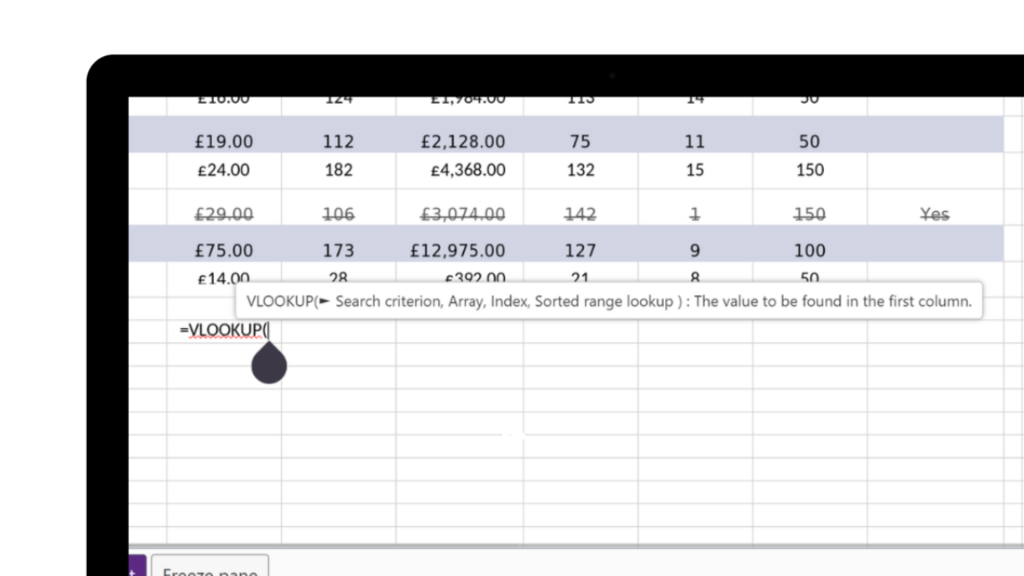
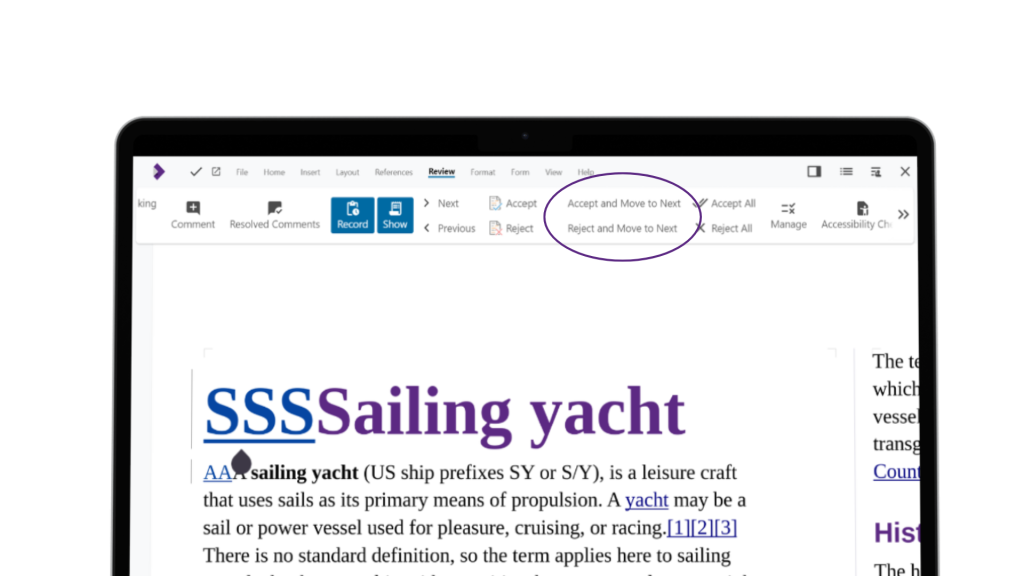
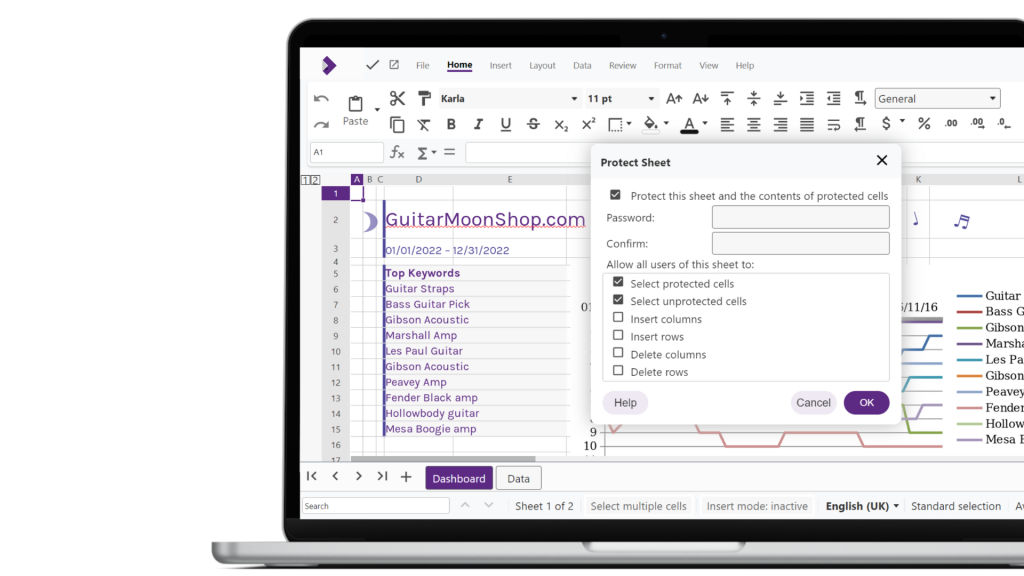
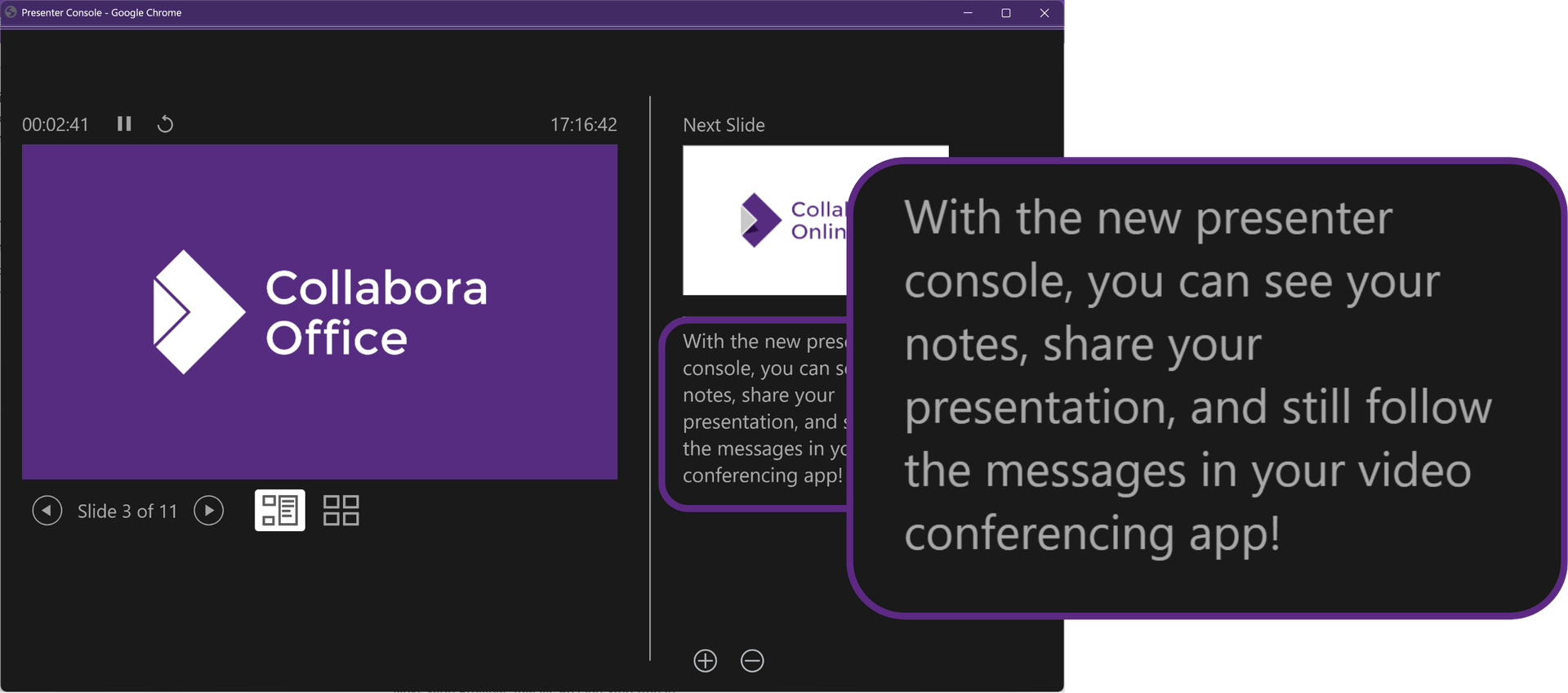
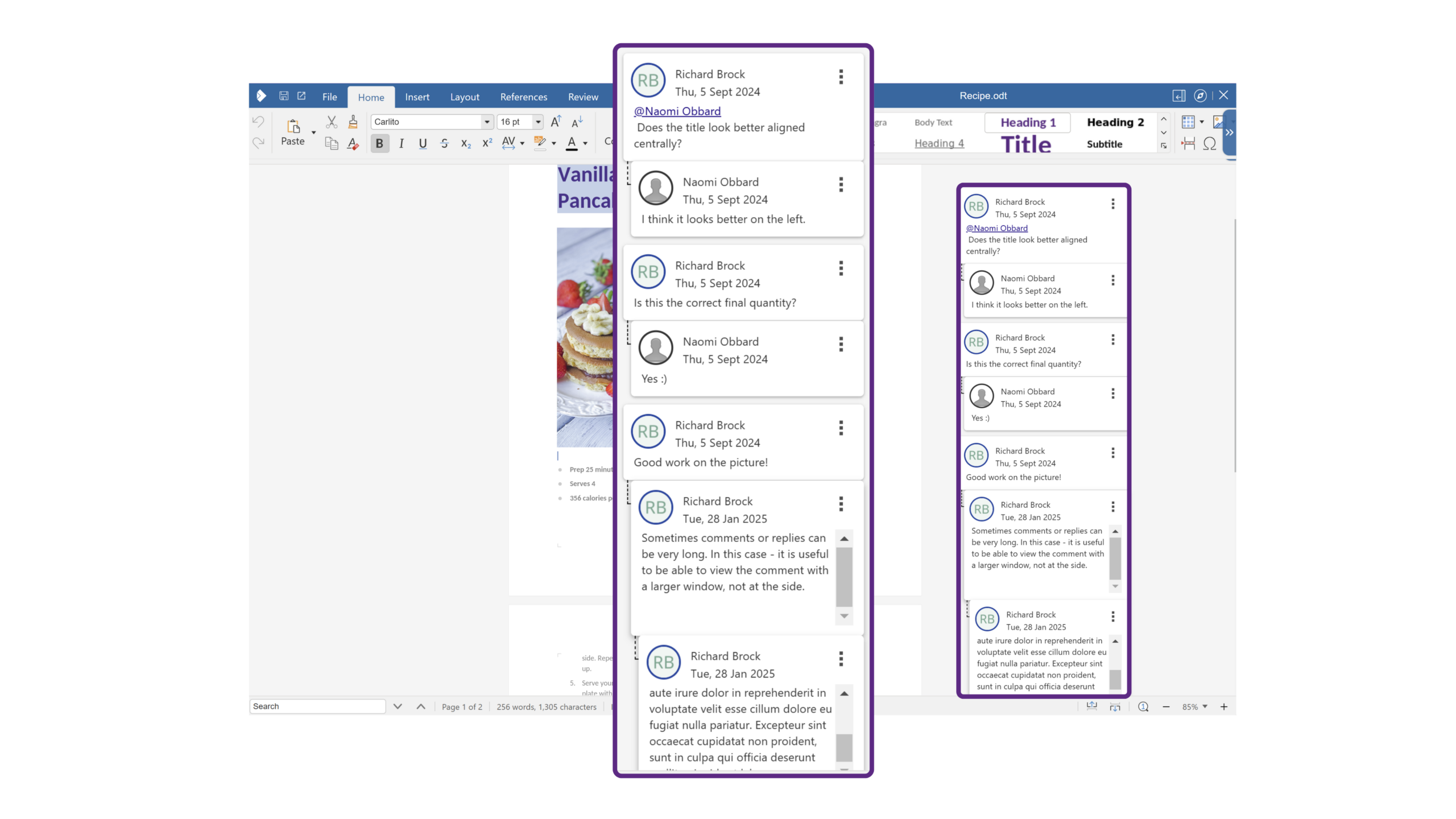
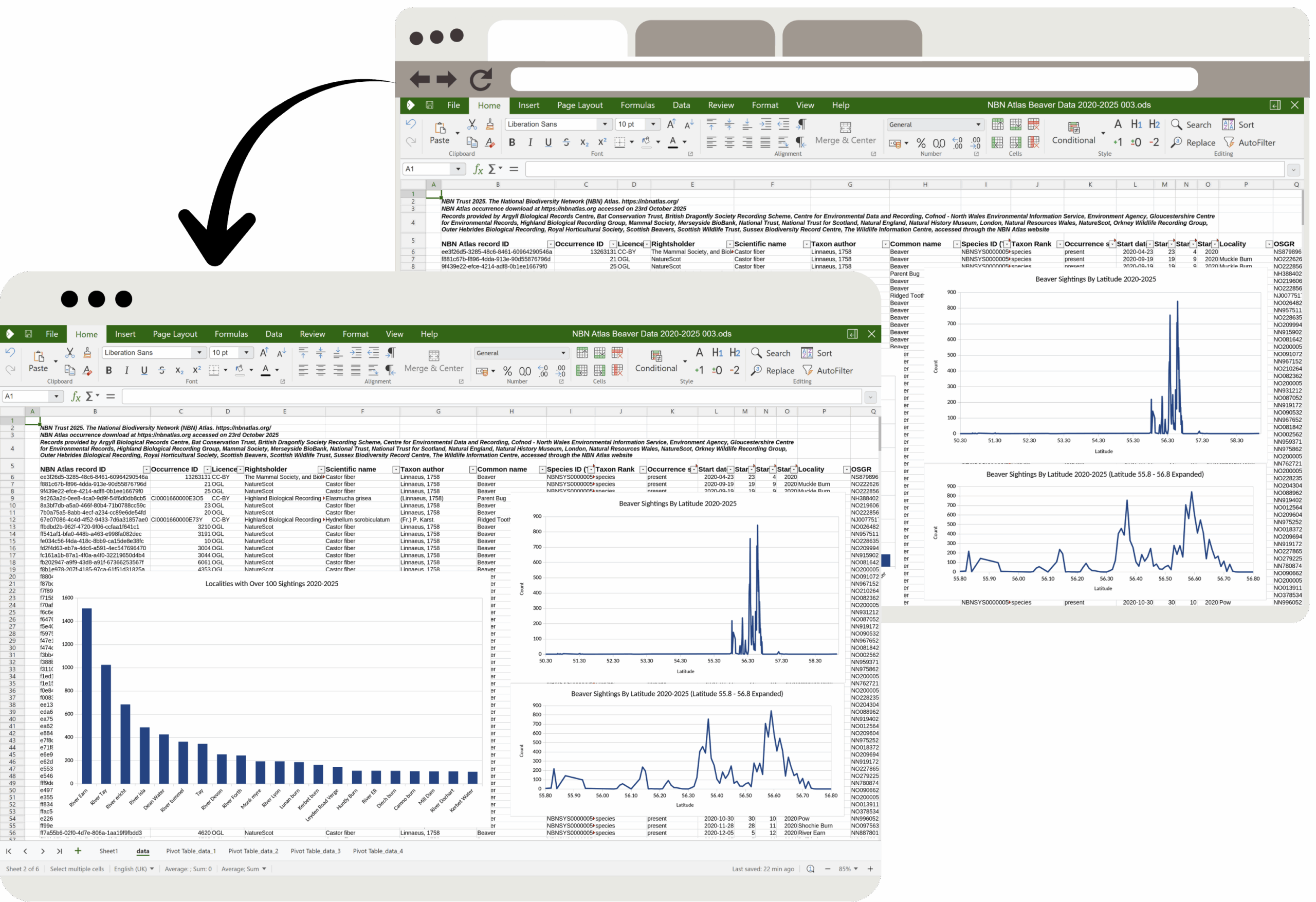
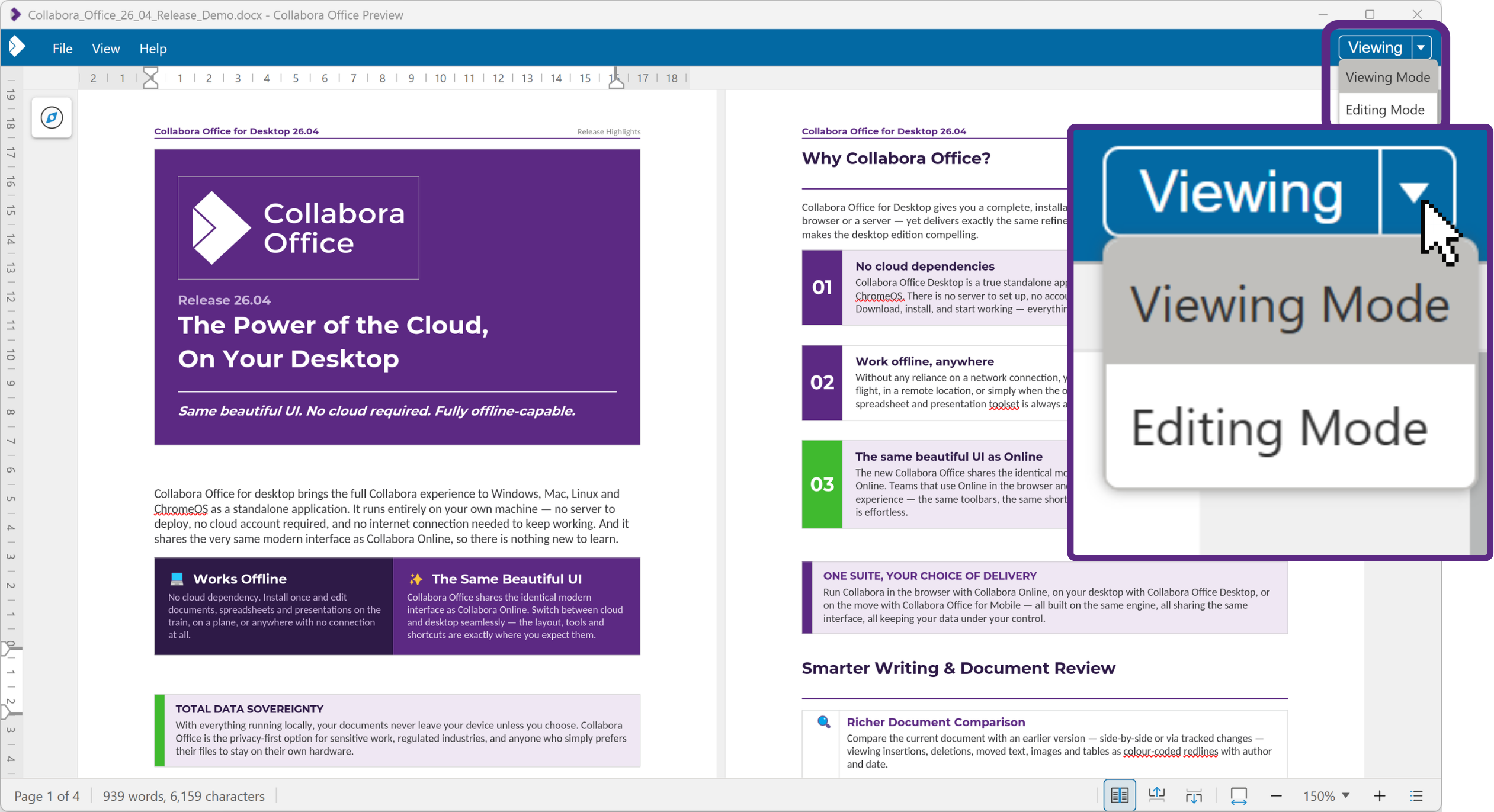
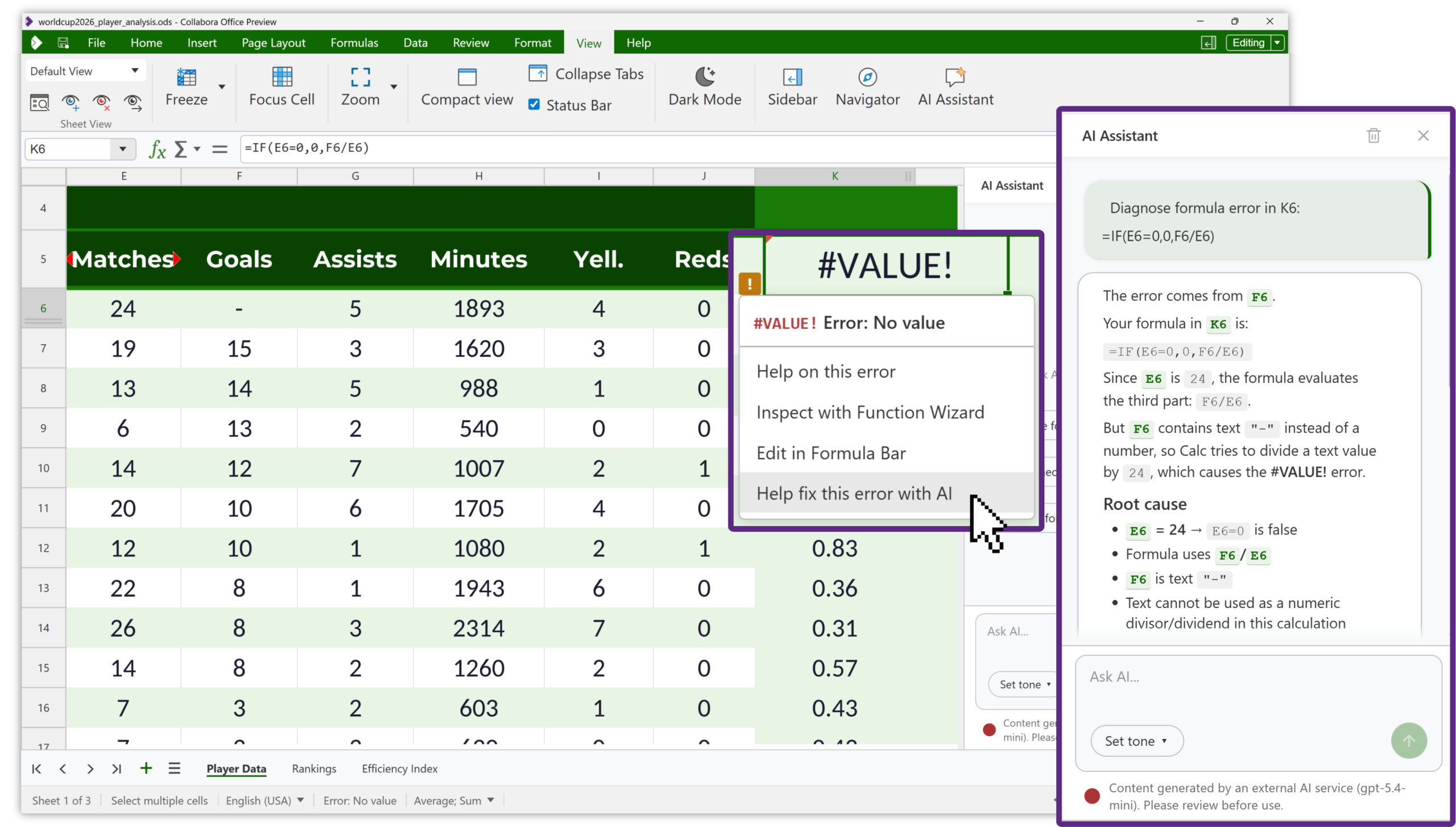
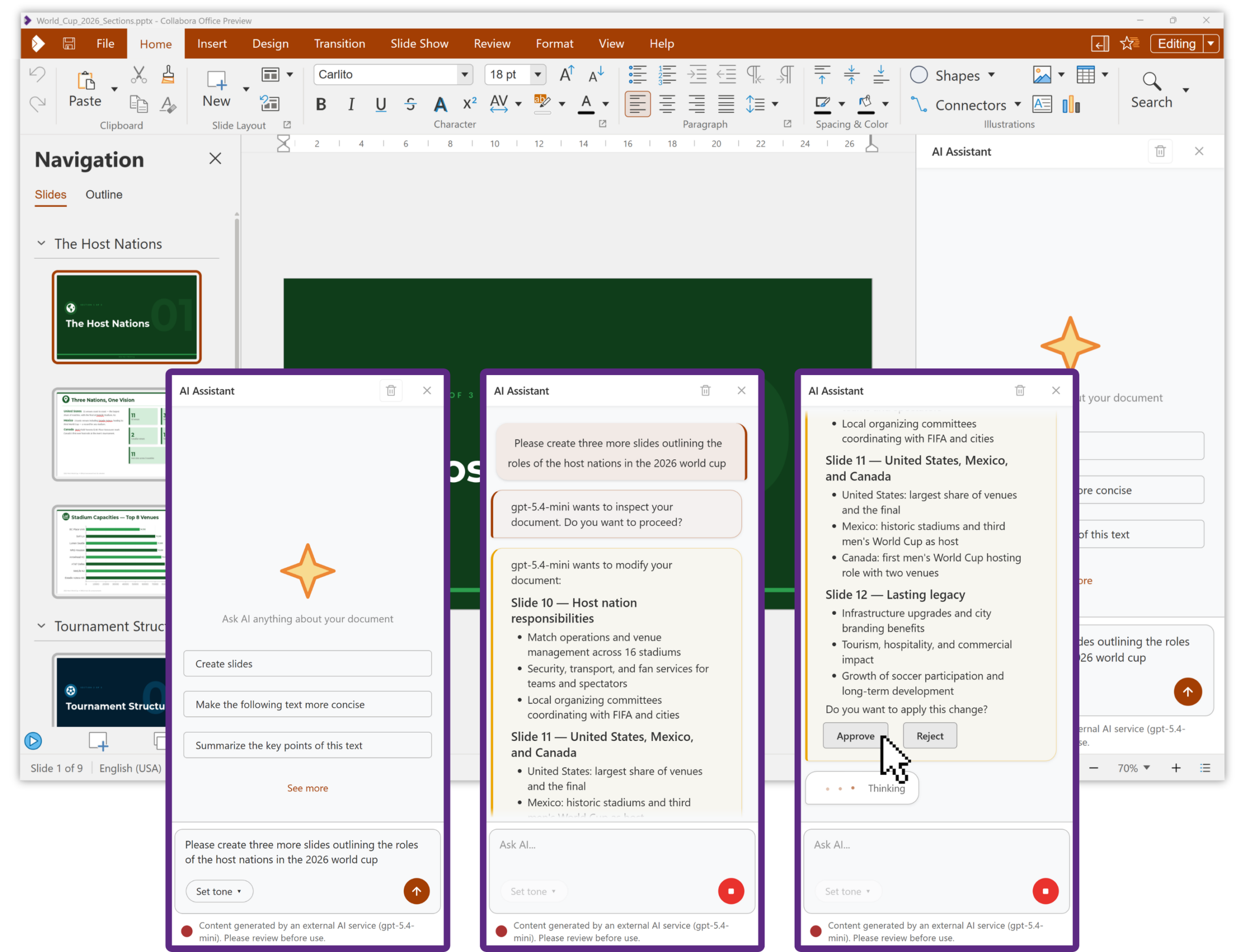
The suite got steadily more capable: jumbo spreadsheets, sparklines and content controls (22.05), document themes, multi-page tables and dark mode (23.05), follow-other-users, cell protection and “present in a window” (24.04), PDF 2.0, a presenter console, per-user change tracking, styles spotlight and new chart types (25.04), and most recently exciting (optional) AI features in 26.04.
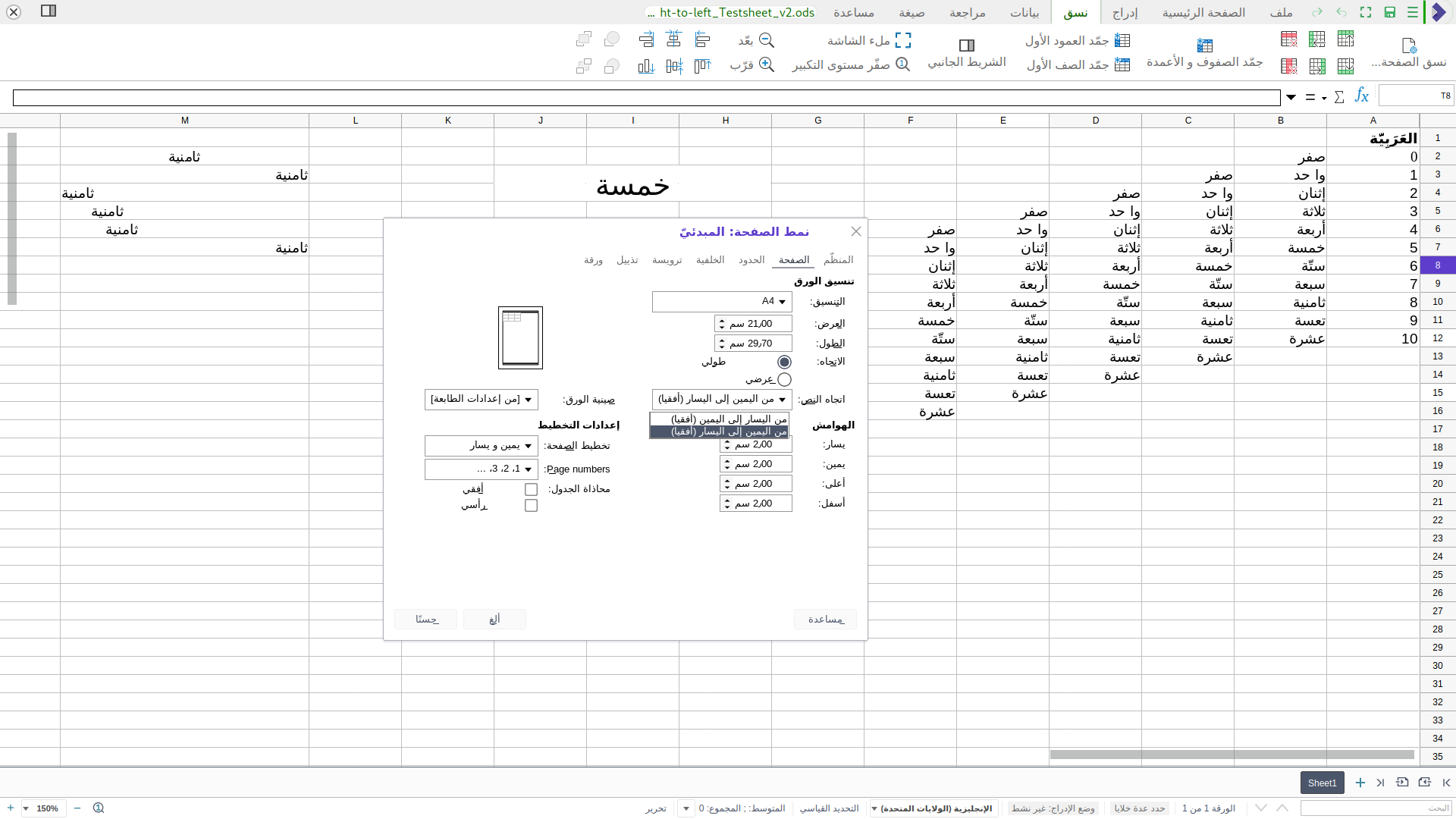
Just as much as the features, accessibility moved from afterthought to feature: an accessibility checker arrived in 22.05, with screen-reader support building from 23.05 until today when Collabora Online Writer has successfully passed the BIK BITV 2.0.
Collabora Online 26.04 - Ten years on
Leaving the server?
We’ve spent this whole piece insisting that everything happens on the server. Time to confess to a little secret: it doesn’t have to.
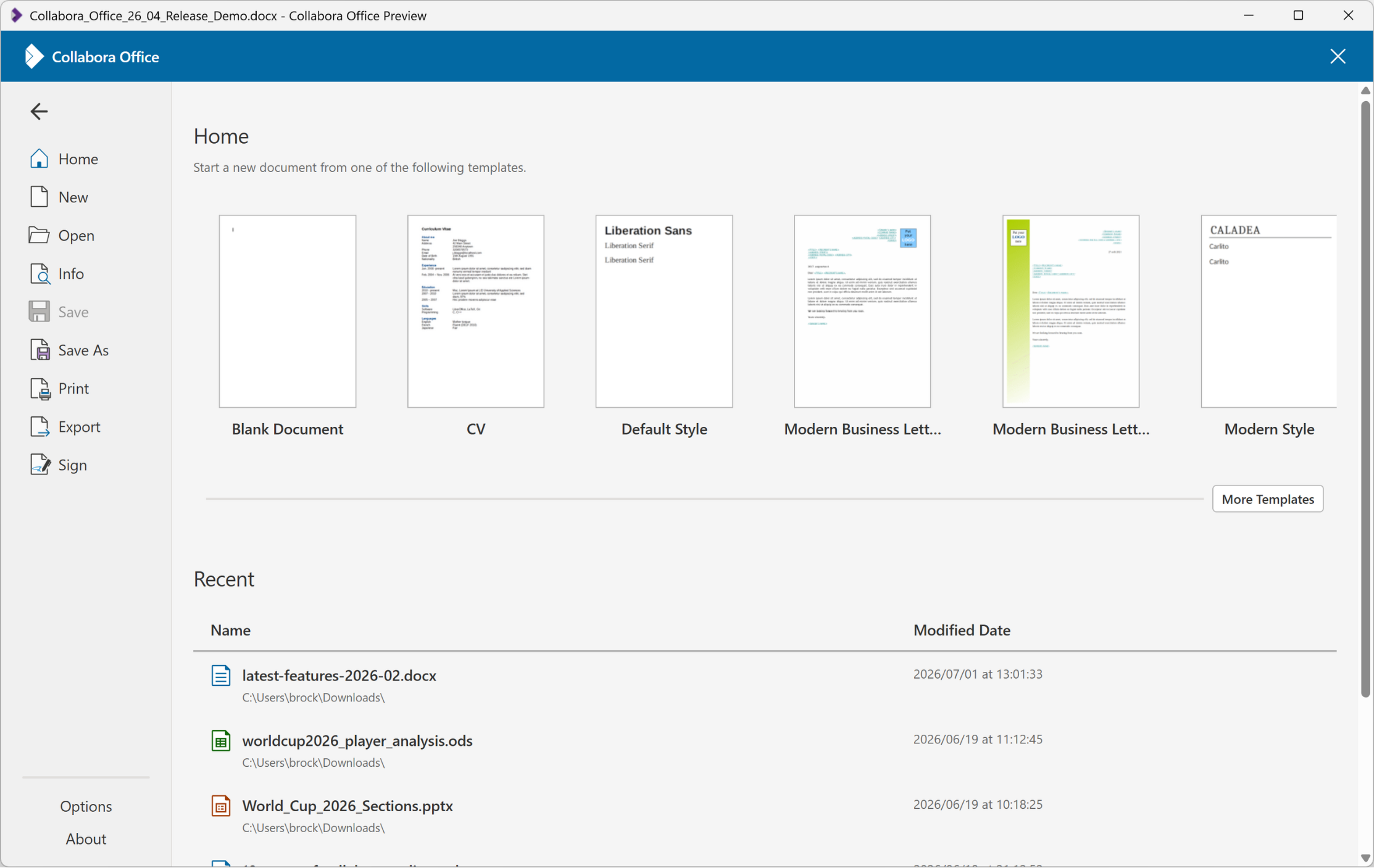
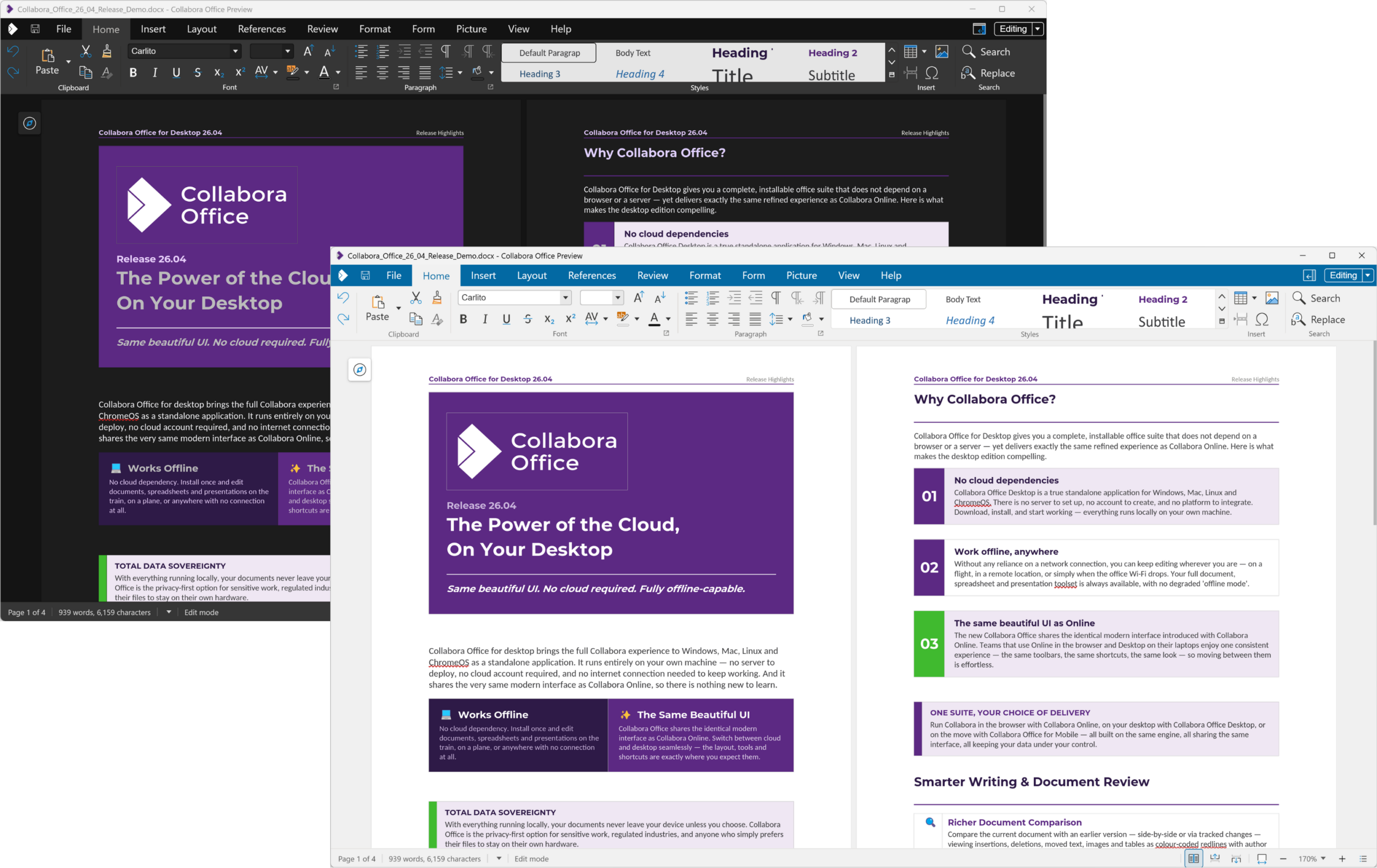
The engine that renders your documents was never welded to a data centre. It’s the same code whether it runs on a rack of servers, on a phone in your pocket, or on your desktop – which is exactly why, in November 2025, Collabora Online arrived as a desktop app – the new Collabora Office. Same interface, same rendering, no server required: your files, on your device, working where you are. (The mobile and chromeOS apps have quietly done this since 2020 – the “server” running on your phone is, architecturally, very similar).
A community that keeps growing
Software this size isn’t built by just a handful of people.
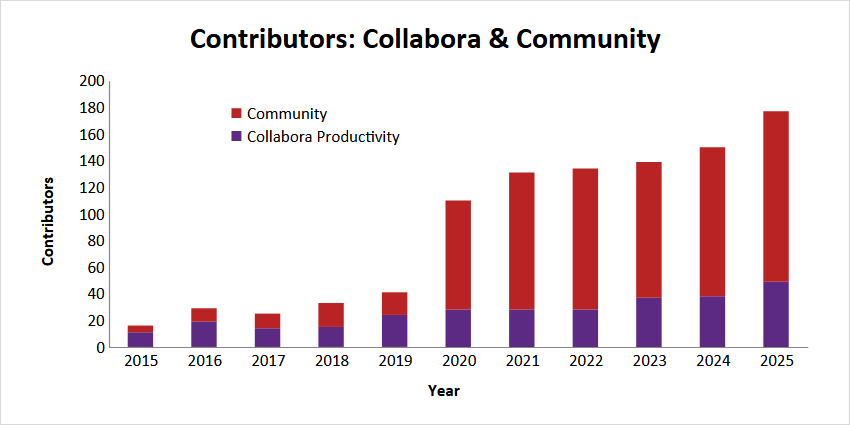
In the first year, 15 people touched the code. By 2020 that was over a hundred a year, in 2025 it was 175, in total more than 500 individuals have contributed across the decade. The two people who made those very first commits are still committing in 2026, ten years on, alongside many other engineers who would become the project’s backbone.
Last year was the clearest sign yet of a healthy project rather than a finished one: over 100 new contributors across code, translations and documentation, 251 community-reported issues resolved, and 85 fresh “Easy Hacks” created for newcomers to pick up. The translation community alone reached 92 languages, with more than 100 translators completing nearly 90,000 strings – close to a million translated words in a single year.
We can’t begin to thank everyone who has contributed so much to making Collabora Online the success it is – but we’ll try anyway. To all of you: thank you.
It’s a community that meets in person, too. COOL Days brought everyone together around the world for fun, talks, workshops and hacking – and the project has mentored Google Summer of Code students since its earliest days.
Serious and trusted at scale
Collabora Online has grown into something organisations bet on.
It’s delivered through more than 200 partners worldwide to millions of users. Universities, government departments, military and SMBs alike run it at scale – 70,000 users at the University of Lille, 100,000 across the Dutch research and education landscape with SURF, the French Ministry of Education, the International Criminal Court, Schlesswig-Holstein administration, the Austrian Armed Forces, and that’s just a few of the organisations we have permission to talk about. We’ve clocked up 115 million docker image downloads, each potentially being used as a server for multiple users… It’s hard to accurately estimate users, but we’re excited to have received such widespread adoption and support.
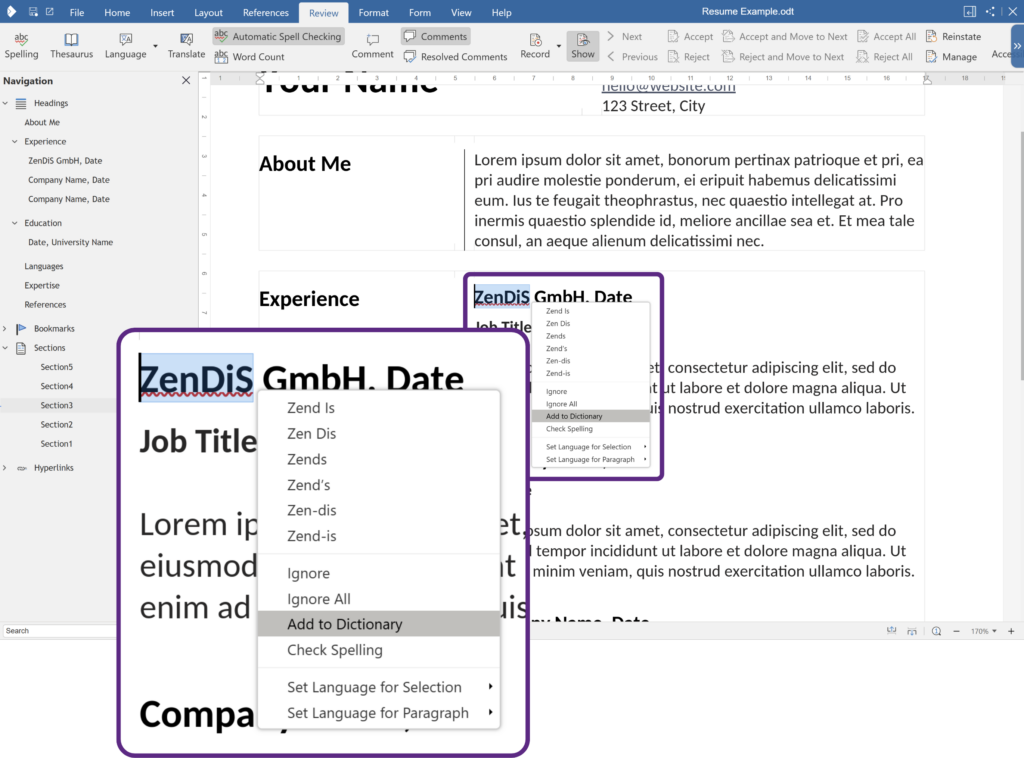
It has also arrived at exactly the right moment. As European institutions push for digital sovereignty and control over where their data lives and who can compel access to it, a fully auditable, self-hostable office suite has gone from “nice to have”, to vital. Collabora is a core component of the German government’s openDesk suite via ZenDiS, and in January 2026 announced new partnerships with companies like the secure-collaboration company Wire and HCL. None of that works without a trustworthy, reliable, interoperable product. Long-term support contracts, signed security updates, SLAs, and automated round-trip interop testing making sure your docx’s, xlsx’s and pptx’s are as happy in Collabora Online as they might be in Microsoft’s more closed offerings (naturally we provide native ODF support).
Ten years in numbers
Over the decade, these contributors have edited or added more than 8 million lines of code, while removing more than 6.6 million. The roughly 370,000 lines that succeed the original ‘online’ codebase are what survived, a neat reminder that most of what makes up software development is an iterative process of improvement. About two-thirds of that online code runs in your browser, not on the server.
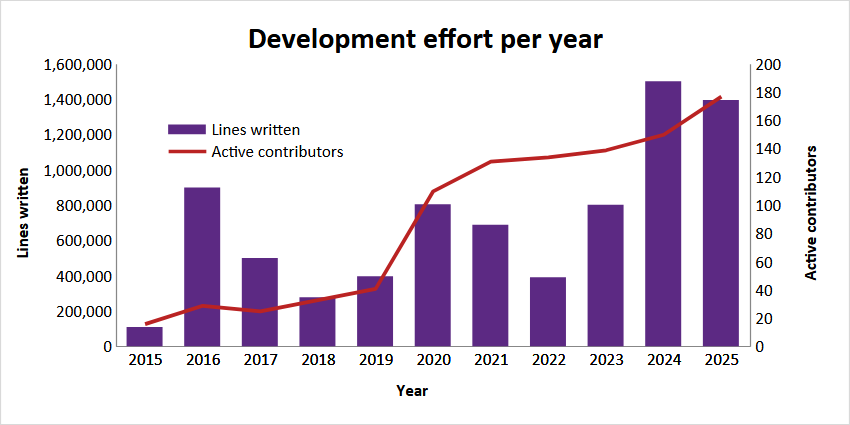
And the project is busier now than it has ever been. The two biggest years for new code are the two most recent, and the active-contributor count has never been higher. As a project, Collabora Online is getting into its stride.
All in all the codebase, particularly after the inclusion of the core ‘engine’ code and the choices to deprecate lots of unnecessary functionality for the new Collabora Office has accelerated cleanups and our ability to evolve and innovate in the code.
Get Involved
Test builds are now available on every platform. The code is open, the community calls are open, and there’s plenty of work to pick up.
-
Try the latest builds: collaboraoffice.com/downloads/CODA-Hd7wwbJWxm/
-
Community page: collaboraonline.github.io/post/communicate/
-
Design system: collaboraoffice.org/design-system
-
Forum: forum.collaboraonline.com
-
Chat on Matrix: #cool-dev:matrix.org
-
Browse open changes: gerrit.collaboraoffice.com
For newcomers especially: the “Easy Hacks” are designed as friendly first contributions, and there were dozens still open at the last count
And if you just want a brilliant office suite
You don’t have to write a single line of code to be part of this! If you simply want a fast, private, capable place to edit your documents, spreadsheets and presentations in your browser, on your phone, or on your desktop – try it out! We’re pleased to have helped contribute to restoring your Digital Sovereignty built with Free / Open Source Software.
Here’s looking forward to the next ten years.